
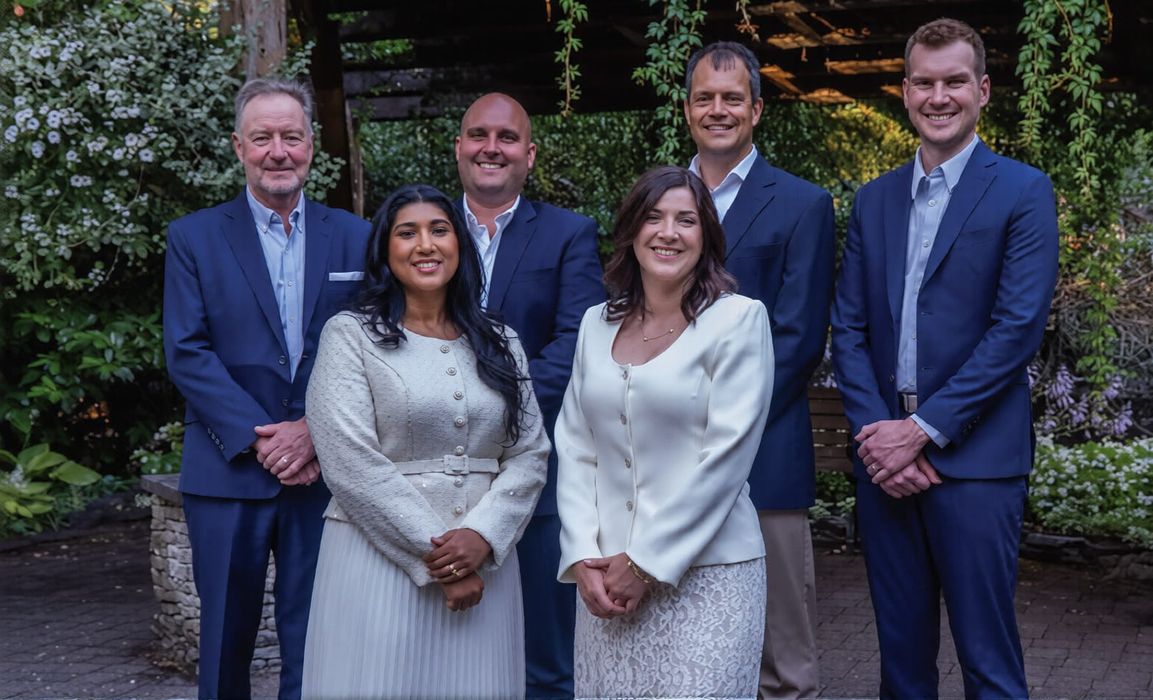
Achieving for Langley City wants amalgamation off the agenda.
Its platform calls it "not a policy objective." One of its council candidates calls the takeover talk "just noise." Its mayoral candidate says the City deserves autonomy, and that she feels "very strongly" about it.
Yet across its platform, a CBC debate and a candidates forum, the slate has not said the one thing that would settle the question: that it would not support a referendum on amalgamation.
That gap is the story.
At a glance
- 🗳️ A vote is the only way. Under BC law, a merger can only happen if both the City and the Township vote for it.
- 🚪 The door is still open. The slate's platform says it would consider a study and "potentially a referendum" if residents petition, without defining how much support is enough.
- 🎙️ "Should be put to a vote." That’s what Mack said at the CBC debate, after saying it isn’t for any elected official to decide.
- 🙅 The other slate said no. Langley City First's candidates said they're not in favour "at all."
- 🔁 Familiar arguments. Several of the slate's criticisms of the City echo ones made by the Township's mayor.
- 💸 The stakes. A merger would put a share of the Township's debt on City residents, and past Canadian mergers haven't delivered the savings they promised.
- ⚖️ To be clear: No one on the slate has said they support a merger.
Like what you are reading?
The Langley Union runs with no ads, no paywalls, and no sponsored content. Only readers like you keeping it going.
Leave a one-time tipWhat the slate has said
The official platform
Achieving for Langley City's website says the City "deserves its own agency, autonomy and to be led by our residents." It says there has been "far too much discussion about hypothetical takeovers," and that amalgamation is "not a focus" and "not a policy objective."
Then it says:
"If and only if Langley City residents initiate a petition demonstrating significant support, would the Achieving for Langley City team consider commissioning an amalgamation study and potentially a referendum."
It's a measured and politically savvy attempt to put the subject to bed. It reassures residents and keeps the slate at arm's length.
What it doesn't do is rule a referendum out.
Delaney Mack, mayoral candidate and slate leader
At the 8 September CBC Early Edition debate, Delaney Mack was asked about amalgamation.
She said: "I don't think that it's for any elected official to say... it should be put to a vote to the residents." She also said Langley City deserves "our own leadership," and that no one can take over the City without residents' consent.
At the Greater Langley Chamber of Commerce candidates forum on 5 October 2026, she said: "The city deserves agency, autonomy and to be led by city residents. That's something that I feel very strongly about."
Simi Rajput, council candidate
At the same forum, asked about the City's relationship with the Township, she said the City is "independent... but not isolated," and repeated the platform's position: only if residents petition with significant support could amalgamation "potentially even happen." Without residents' consent, she said, "it's all just noise."
She also said the mayor's slate had made the campaign about "a hypothetical takeover to distract the residents from their poor governance."
The contrast
At the same forum, Langley City First's Rosemary Wallace said her slate "is not in favour of amalgamation at all." Shawn Caldera said: "I'm not for it at all."
Each took one sentence.
Neither Mack nor Rajput has said she supports a merger, and we're not suggesting either does. The issue is narrower.
The slate has spoken about amalgamation many times, in carefully chosen words, and none of those words rule out a referendum.
Why "if and only if" isn't good enough
In BC, a merger can't be forced. Section 279 of the Community Charter says there are no forced amalgamations. Two municipalities can merge only if separate majority votes in each come back in favour.
That means a referendum isn't just a neutral first step. A referendum, once initiated, is where the decision actually gets made, and it's the only way amalgamation could ever happen.
"If and only if" sounds like a high bar. It isn't. The platform doesn't define "significant support," or say who would decide whether a petition meets it. A petition can be organized by anyone, including people who want a merger.
The slate hasn't promised to keep the door shut. It has laid out the rules for how the door opens, and left the opening to someone else.
There's also no public sign that City residents are asking for any of this. No petition has been launched that we're aware of, and we've seen no polling suggesting City residents want amalgamation or a vote on it. The slate's conditions describe a demand that, as far as the public record shows, doesn't exist.
That matters, because describing a path to a referendum nobody has asked for does something on its own. It turns an idea that was close to unthinkable into an option.
Saying a merger isn't the goal, while explaining how it could happen and echoing the Township mayor’s criticisms, tells voters it's still on the table.
In our view, that's how ideas that were politically untenable start to become possible. Whatever the slate intends, that is the effect of its words.
And when the slate's leader was asked directly at the CBC debate, she didn't describe a high bar. She said the question "should be put to a vote." In our view, unscripted answers like that are often a better guide to how candidates think than a polished platform.
The first half of her answer matters too.
Before saying the question should go to a vote, Mack said: "I don't think that it's for any elected official to say." Her platform says the same: it would be "inappropriate" for City officials to lead "one way or the other."
That can sound like humility, and it may well be meant that way.
But in our view, it also suggests that her personal feelings about the City’s independence, however strong, wouldn’t be what guides her as mayor.
The one position she has taken as a would-be leader is that the question should go to residents.
So this is a big deal for one reason: the slate asking to lead Langley City treats the City's existence as a question that can be put to a vote under the right conditions.
When a community's existence is at stake, any opening matters. If the slate had said amalgamation is off the table, there would be nothing to write about. We would rather this stay a dormant non-issue. The slate's own words are what keep it alive.
Mack and Rajput were both asked about amalgamation in writing before our profile of the slate was published. Neither responded. Rajput has since repeated the platform's position at a public forum, and Mack has been invited publicly several times to clarify hers. Neither has ruled a referendum out in any public statement we’ve found.
What a merger would mean for City residents
Our review of three decades of Canadian evidence, "Should the Langleys amalgamate? Here's the evidence," found real risks for Langley City residents:
- 💸 Taking on Township debt. When municipalities merge, their debts merge too. In November 2025, Township finance staff told council that the current council had authorized $526.7 million in borrowing, not counting the Township-controlled Langley Housing Trust Society. At the time, staff said no housing society debt had been established. Langley Tomorrow publisher Mike Parker, now an independent Township council candidate, puts total Township debt, including the housing society, near $861 million. City residents, who carry comparatively low municipal debt, would take on a share they never voted for.
- 🧾 Higher bills, not lower ones. Merged councils tend to settle on the more expensive option for fees and tax rates. If the Township's flat utility fee were adopted, City condo and townhouse owners could pay roughly $700 more a year.
- 📉 Savings that never arrive. Ottawa's merger was projected to save $86.5 million a year, Toronto's $300 million, and Halifax's more than $20 million. None of those savings materialized.
- 👥 Higher payroll. Wages and service levels tend to rise to match the higher-cost partner, and every taxpayer pays for it.
- 🏗️ Transition costs. Halifax's merger cost about $26 million against a $10 million estimate. Ottawa's ran to about $189 million.
- 🔇 A quieter voice. A dense, 10-square-kilometre city of about 29,000 people would become a small part of a much larger municipality, competing for council attention with communities that have very different needs.
- 🔒 Very hard to undo. Montreal's suburbs voted to leave their merger, and even then got back only some of their powers.
 Rainer Fehrenbacher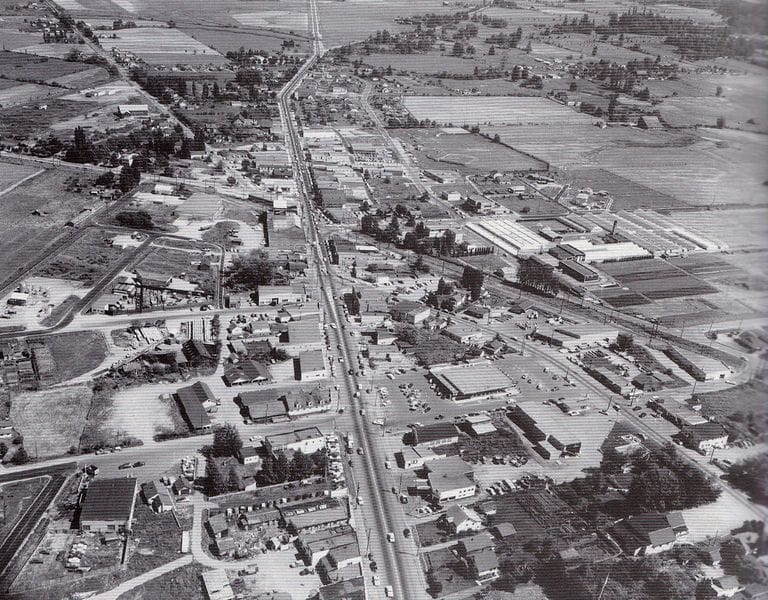
A city that chose itself
Langley City exists because its residents fought for it.
In the early 1950s, Langley Prairie was the urban core of the Township of Langley. It made up roughly a fifth of the Township's tax base, while its requests for basic infrastructure were turned aside. When residents asked for streetlights, Township leader George Brooks declared that "not a nickel" would be spent on them.
In September 1954, more than 85 per cent of voters chose to leave. On 15 March 1955, the City of Langley was born.
The reasons for that split haven't gone away. The City is dense and walkable, about 70 per cent of its households live in apartments and townhouses, and a SkyTrain station opens in 2029. The Township covers more than 300 square kilometres of suburbs, villages and farmland.
Both are good places with different needs. That was true in 1954, and it is true today.
Not a distraction
Rajput told the forum the mayor's slate made the campaign about a takeover to distract from its record.
But the takeover question didn't start with the City's mayor. It came from next door.
Township Mayor Eric Woodward has openly questioned whether the Langleys are well served by two municipalities. "I don't believe we are," he told CBC in September 2025. He has argued the City is poorly governed, pointing to its higher crime rates, which he says the Township subsidizes, and its readiness for SkyTrain.
The crime picture is mixed. In 2024, Langley City's crime rate and Crime Severity Index hit their lowest levels since 1998. In 2025, the index jumped 25.8 per cent, driven largely by violent crime, but it remains well below its 2023 level.
As a regional commercial hub, the City will likely always report more crime per resident than its suburban neighbour. Both Pachal and Mack have said the index is useful for tracking trends within a community, but not for ranking communities against each other. In 2024, Mack said comparing the City with other municipalities “would not be an appropriate use.”
Woodward's words have come with action. His party, Progress for Langley, has registered in the City. His council ended the joint RCMP arrangement and moved to restrict the City's access to the Patti Dale animal shelter. Each of these steps put pressure on the City from outside, and none required the City's agreement.
Pachal's concern rests on that record. He has said Woodward told him directly that he wants the City's casino revenue. At the CBC debate, he said he formed his slate partly because he had heard Woodward planned to run a team in the City. Whatever voters think of Pachal, his concern is grounded in what the Township's mayor has said and done.
Woodward is entitled to make his case. Under BC law, the Township can't force a merger. What it can do is keep raising the question until someone on the City side agrees it deserves an answer at the ballot box.
That pressure is real, and it isn't a distraction.
In our view, that's what makes the slate's response so concerning.
The Township's mayor has been clear about where he stands, and he has backed his words with action. Anyone asking to lead Langley City has every reason to be alarmed about what that could mean for the City's future.
Instead, the slate's platform dismisses the subject as talk of "hypothetical takeovers," and Rajput called it a distraction and "just noise." Mack has said she feels strongly about the City's autonomy, and we take her at her word.
But caring deeply about the City's independence doesn't fit with brushing off the Township's challenge to it as "just noise."
That dismissal isn't only a statement about the slate's own intentions. In our view, it reflects how the slate reads the whole political moment: as if open pressure on the City's independence were a campaign talking point, not a real risk.
A leader of Langley City should be concerned about this.
The evidence that the City's independence is being questioned, openly and repeatedly, is on the public record. Leaders who wave it away are asking residents to trust them with a question they appear not to be taking seriously.
Familiar arguments
Several of the slate's arguments echo ones that have come from the Township side.
The first is the "financial interest" line. Woodward told CBC that City politicians "need the City of Langley to exist so they can be politicians." The slate's platform says "elected officials in the City have a financial interest in the outcome," and that it's therefore inappropriate for them to lead either way. It applies that logic in one direction only.
If City officials have a financial interest, so would Township officials, and the platform doesn't say so.
In our view, the effect is to cast any City official who defends the City's independence as self-interested, including the slate's own candidates once elected.
The second is who's to blame for the dispute with the Township. The slate's platform carries the message "Independent. Not isolated," alongside "Two municipalities. One community. Protect Langley City. Work with Langley Township." Rajput repeated the theme at the forum, describing the City as "independent... but not isolated."
In our view, it's a confusing message. "Not isolated" implies the City's current leadership has been isolationist, and that the City shares the blame for the conflict CBC called the "War of the Langleys."
The platform makes the same suggestion more directly: "fighting with the Township of Langley leadership cost city residents." At the forum, Scott Thompson said the current mayor and council "opted for the bad relationship path," and Mack said Pachal is "not somebody that builds bridges," pointing to his "conflict with the township mayor."
Our reading of the public record points the other way.
The biggest moves in this dispute have come from the Township: its mayor questioning whether the City should exist, his party registering in the City, his council ending the joint RCMP arrangement, and restrictions on the City's access to the Patti Dale animal shelter.
The City's side has mostly been responding to those decisions. Pachal has been blunt, saying he won't "kowtow just because there's someone who's larger."
But standing up to a neighbour's decisions isn't the same as starting the fight.
The Township has its own explanations. Woodward has said the City's share of policing costs didn't match the time officers spent there, and that the City isn't adequately funding public safety. The slate's platform makes a similar case, comparing the City's RCMP caseloads with the Township's. That overlap leaves City residents in a strange position.
The City didn't choose this conflict, yet a slate asking to lead it describes the City as part of the problem.
Wanting a better relationship with the Township is a reasonable goal. But in our view, putting the blame on the side that's been on the receiving end gets the story backwards.
The third is the governance argument itself. Woodward has argued the City is poorly governed. Rajput told the forum the City's leadership was distracting residents from "their poor governance."
Challengers are entitled to criticize the incumbent's record. That's what elections are for. We have also seen no evidence of coordination between Achieving for Langley City and Woodward or Progress for Langley, and we are not suggesting there is any. But words don't need coordination to have an effect.
In our view, read together, the slate's openness to a referendum and its echoes of the Township's arguments send a message, whether intended or not: that Langley City's independence is negotiable, and that defending it is a matter of politicians' self-interest.
That's the opposite of what City residents should hear from people asking to lead them.
Letting the people decide
"Let the people decide" sounds like the most democratic answer there is. Recent history shows it's rarely that simple.
In 2016, British Prime Minister David Cameron called a referendum on whether the United Kingdom should leave the European Union. He personally campaigned to remain. Voters chose to leave by 52 to 48 per cent, Cameron resigned, and the country spent years working through the consequences.
Cameron's personal view didn't matter. He chose to put the question to voters when he didn't have to, and that choice, not his opinion, is what made Brexit possible.
Alberta is now living through its own version of this scenario.
On 19 October, Albertans will vote on whether their government should begin the legal process toward a binding referendum on separating from Canada. Premier Danielle Smith says she opposes separation and will vote for Alberta to remain. Whatever her personal view, the question is now on the ballot.
Referendums like these shake the foundations of social and political life that everyday residents usually take for granted: which community they belong to, who represents them, and how their taxes and services work. Calling one opens a door that many residents, quite possibly most, would rather keep closed. Once it's open, it is very hard to shut.
These comparisons are about process, not people. We are not suggesting that Mack, Rajput or anyone on their slate shares the views or motives of anyone involved in Britain or Alberta. The point is narrower.
In each case, a leader who personally opposed the outcome still opened the door to it. Once the question was on the ballot, the leader's personal view mattered far less than the fact that the vote was happening.
A referendum on amalgamation would work the same way. It could be decided by a few points, and turnout, timing and the wording of the question would all matter. Once the votes are counted, the outcome would no longer depend on what any candidate personally thought.
Mack’s own answer reflects that logic: she said it isn’t for elected officials to decide, and that the question should go to a vote.
Elbows up
Canada faced its own version of this question last year, when talk of Canada becoming the 51st state came from south of the border. Canadians didn't respond by asking for a referendum.
The answer was "Elbows Up."
Our country's existence was not up for negotiation, no matter how the idea was framed or who raised it.
There's a lesson in that for Langley City.
Criticizing a council's record is fair game in any election, and some of the slate's concerns, like the jump in crime in 2025, are backed by data.
Rajput told the forum the City's leadership has delivered "poor governance" and infrastructure that's "falling apart."
In our view, when a larger neighbour is openly questioning whether your community should exist, that message, paired with openness to a referendum on the City's future, tells residents something they may not want to hear, whether intended or not: that Langley City is broken enough to put up for a vote.
As with Britain and Alberta, this is a comparison of principle, not people.
Communities that value their independence don't treat it as an open question just because a larger neighbour asks it. And good leaders don't leave their community's existence in limbo, whatever the political moment.
Our view
Langley City residents deserve leaders who treat the City's existence as settled, not as a question for a vote, whether a petition comes or not.
Achieving for Langley City can settle this easily, and it doesn't take an impossible promise. No candidate can pledge to ignore the law. Provincial law has its own ways a change in local government can be raised, including a vote the province can direct, and no council could promise to override them.
But the slate's own trigger, a petition showing undefined "significant support," followed by a study and "potentially a referendum," is a much lower bar, and one no law requires. It’s a commitment the slate chose to make.
A promise to rule something out "under any conditions" is hard for anyone to make, and that difficulty can give cover to vague answers. So the ask is simpler: will the slate's candidates say they would not start, support or campaign for a referendum on amalgamation, and that they would oppose a merger if one were ever put forward?
Their opponents said it in one sentence.
In every public statement we’ve found, the slate’s platform and candidates have not said it. If they say it now, we'll report it and update our coverage. Until then, their own words are the record.
References and Further Reading
Achieving for Langley City
- Achieving for Langley City, campaign platform, including the “Amalgamation” and “Township Relationship” sections and the “Independent. Not isolated” graphic (accessed October 2026)
- Achieving for Langley City, “The Team”
Debates and forums
- CBC News, The Early Edition, “Who will be the next mayor of the City of Langley?”, mayoral debate between Mayor Nathan Pachal and Councillor Delaney Mack, 8 September 2026
- Greater Langley Chamber of Commerce, Langley City candidates forum, 5 October 2026
Township of Langley and the City–Township relationship
- CBC News, “War of the Langleys: governance tensions between township and city mayors spills into the open”, September 2025
- Langley Monitor, “Pratt joins Woodward’s slate as the brand expands into the city”, 20 September 2025
- Greater Langley Chamber of Commerce, Township of Langley candidates forum, October 2026
- Township of Langley Regular Council Meeting, 17 November 2025, item G.3 (Temporary Borrowing Bylaws), video at 41:22
- Langley Tomorrow, Township debt analysis by Mike Parker, 2026
- Langley Advance Times, “Self-styled ‘budget watchdog’ runs for Langley Township council”, 8 July 2026
Crime data
- Statistics Canada, Crime Severity Index and crime rate by police service
- Langley Advance Times, “Crime severity down in Langley Township, but up in City”, 24 July 2026
- Langley Advance Times, “Langley City crime severity comparison questioned”, 7 August 2024
- Nathan Pachal, South Fraser Blog, “Langley City’s Crime Severity Index and Total Crime Rate at Lowest Level in Over 25 Years”, 30 July 2025
Law
- Community Charter, SBC 2003, c. 26, section 279 (no forced amalgamations)
- Local Government Act, RSBC 2015, c. 1, section 8 (provincially directed votes on changes in local government)
Alberta referendum
- The Hub, “Alberta’s referendum on leaving Canada explained: What Canadians need to know”, 27 May 2026
- The Canadian Press via CP24, “Elections Alberta set to verify separatist referendum petition after court stay”, 6 July 2026
What did you think?
Help us improve! Take a quick 60-second survey to share your thoughts on this article.
Take the Survey