
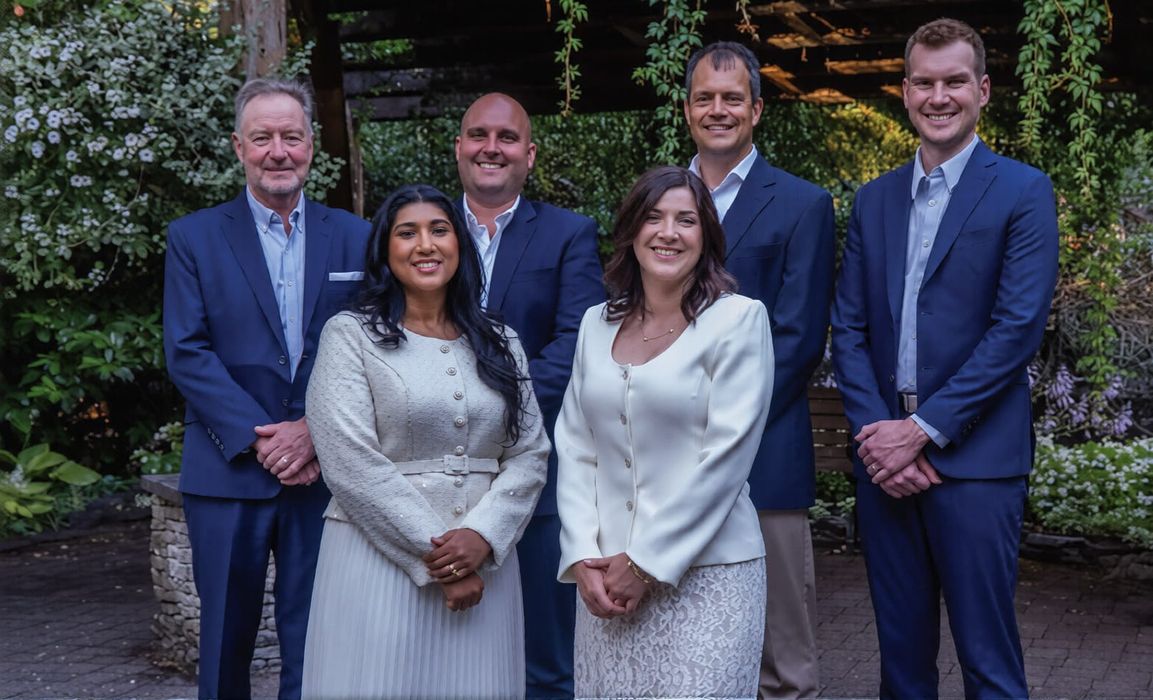
On 23 September, The Langley Union sent a written list of questions to all six candidates running under the Achieving for Langley City banner: mayoral candidate Delaney Mack and council candidates Andrew Flitton, Michael Hylands, Rick Orlando, Simi Rajput and Scott Thompson. Each was provided with almost a week to reply.
None of the six responded.
The questions covered amalgamation, a specific plan to lower property taxes, whether they would reverse this year's firefighter and RCMP hires, the 200 Street BC Builds project, the four parking amendments attempted on the night the new Zoning Bylaw passed third reading, Thompson's April ratepayers association and his listed role with the Cloverdale-Langley City Conservative Association.
This profile proceeds on the record, and it should be read with that silence in mind. Where a question would ordinarily be answered by the candidate, the piece names what was asked, and notes that no answer was given. The offer to update this article with any candidate's reply remains open.
The slate at a glance
The points below are our reading of the slate's stated priorities, based on its own campaign materials, its candidates' public statements, and Councillor Mack's record on council. The italic notes are our editorial concerns with each.
🏠 Protecting single-family neighbourhoods from apartment-scale development
A city of 10.18 square kilometres cannot grow outward. When costs rise, it can cut services or add households to share the bill. The slate has not said what it would cut, and its leader has voted against new housing, including 302 rental homes in Simonds.
💰 Lowering property taxes
Mack says she would find savings in City administration. Neither she nor any other candidate has said how much that would save or which services it would touch. Most of this year's tax increase went to maintaining existing services. The rest paid for two firefighters, two RCMP officers, longer pool hours and an infrastructure levy. Mack voted against that budget, and the slate has not said whether it would reverse those hires.
🤝 Openness to revisiting the City's relationship with the Township
At the CBC debate, Mack said amalgamation should be put to a vote of residents, not decided by elected officials. Pachal said he is "absolutely opposed." In our view, proposing a referendum that nobody has formally requested is not neutrality. A vote is the only legal route to a merger, and it is the step Township Mayor Eric Woodward has been pushing toward since 2025.
🚗 Redirecting spending from bike lanes to road maintenance
Roads are worn down by vehicles, not bicycles. A bike lane costs a fraction of a traffic lane, in a city where trips are almost all under five kilometres. Every new resident who rides instead of drives is one less car on the roads Mack says are falling apart.
👮 More focus on public safety
Mack and one other councillor voted against the budget that funded two new firefighters and two new RCMP officers. The slate has not said whether she opposed the hires or only the tax increase that paid for them.
🏛️ A stronger dissenting voice on council
The mayor has one vote in seven and must build majorities to govern. By her own account, none of Mack's budget amendments passed this term. Her term has also included motions that found no seconder, code of conduct complaints on both sides, and a court petition against council and the mayor. On the record so far, she has not shown she can build a majority.
Like what you are reading?
The Langley Union runs with no ads, no paywalls, and no sponsored content. Only readers like you keeping it going.
Leave a one-time tipAdditional editorial concerns
⚠️ Candidate Scott Thompson explicitly and publicly excluded Nicomekl and Douglas, where most of the City's apartments are, from his April ratepayers association, then filed to run for a seat with authority over both.
🏢 Mack cast the lone vote against a 302-home BC Builds project in Simonds that included 91 permanently below-market rental homes and a 49-space childcare centre. Ten months later she voted twice against a 26-unit townhome project at 45A Avenue and 208 Street.
🚙 On the night the new Zoning Bylaw passed third reading, four parking amendments were attempted, two of them targeting non-market and below-market rental housing specifically, which could have raised rents on the cheapest homes in the city. The seconded motion was defeated with all six other members of council opposed.
⚖️ Over two years, four intertwined code of conduct complaints (three brought by Mack, one by Councillor Teri James against Mack) have coincided with roughly $328,000 in investigation costs and a legal budget increase from $90,000 to $500,000. The Chief Administrative Officer has said much of the new budget goes to defending the City against Mack's BC Supreme Court petition and to a separate legal matter the City has not disclosed.
🇨🇦 Scott Thompson is listed by Elections Canada as chief executive officer of the Cloverdale-Langley City Conservative Association. The council candidate did not respond when asked whether he would keep the role if elected.
Delaney Mack's Achieving for Langley City
On 17 October, Langley City voters will elect a mayor, six councillors and two school trustees for a four-year term. Two slates are on the ballot for council.
One is Langley City First, Mayor Nathan Pachal's re-election slate. The other is Achieving for Langley City, led by Councillor Delaney Mack.
This is the first of two profiles for the City race. It sets out who Achieving for Langley City is and where the slate's record stands on the questions that will shape the next council. A companion profile of Langley City First follows.
Who is on the ticket
Six candidates carry the Achieving for Langley City banner. Mack is running for mayor. Andrew Flitton, Michael Hylands, Rick Orlando, Simi Rajput and Scott Thompson are running for council.
Mack is the only one who has held office. She was elected in 2022 and, until recently, ran a small business on the downtown one-way.
The other five are first-time candidates on paper, but three of them came to the ballot by way of City Hall itself. Thompson has sat on the Advisory Design Panel, the body that reviews the design of development applications before they reach council, since at least 2020, and served on the Crime Prevention Task Group. Orlando sits on the Socio-Economic Development Advisory Committee. Flitton was appointed to the Crime Prevention Committee at a closed council meeting on 26 January of this year. His campaign profile lists a different name for that committee, and we had asked him to clarify. He did not reply.
The four newer names surfaced together.
Between 14 and 22 May, Flitton, Hylands, Rajput and Thompson opened Facebook election pages within nine days of each other, all using the same "for Langley City" naming formula (e.g. "Firstname Lastname for Langley City").
Asked in early June whether that amounted to a slate, Flitton told the Langley Advance Times that "For Langley City is not a slate," and that nothing was formal yet. Ten weeks later, on 17 August, all four appeared alongside Mack and Orlando under a single banner registered with Elections BC.
The slate describes its approach as common-sense decision making and promises to spend tax dollars where residents can see and feel the difference. Its named priorities are public safety, basic services, affordability and better governance.
The arithmetic of ten square kilometres
Langley City covers 10.18 square kilometres. That is the whole of it, hemmed in by the Township on three sides and Surrey on the fourth. There is no room to expand outward and there never will be.
That single fact ought to shape every conversation the city has about taxes, because it forces a choice. A city that cannot grow outward has two options when costs rise. The city can cut what it offers residents, or it can add more households to share the bill. There is no third door.
When staff presented the 2026 budget to council, they included a comparison that deserved more attention than it got. Among Lower Mainland municipalities, Langley City has the second-lowest combined tax and utility rates for multi-family homes. That is not generosity. It reflects a truth about how cities work.
An apartment building puts dozens or hundreds of households onto a footprint that might otherwise hold three or four houses. Those households share a water main, a sewer line, a stretch of pavement, a fire hall.
The cost of serving each of them falls, because the expensive part of a city is not the people. It is the distance between them.
Detached housing on generous lots is the most expensive form of development a municipality can service. Every house needs its own frontage, its own connections, its own share of road to maintain. Spread thinly enough, those costs outrun anything the property will ever pay in tax.
The funding gap gets covered by everyone else, and then by deferred maintenance on the same roads this slate says are wearing out.
Achieving for Langley City is campaigning on lower property taxes. That is a reasonable goal. But its leader's record on council includes votes against the new households that would spread the cost.
Both of those things cannot be true at once, and the slate declined the chance to reconcile them for this profile.
The Township question
In her CBC debate with Pachal, Mack was asked directly whether the two Langleys should merge.
Her answer: "I don't think that it's for any elected official to say," and that the question "should be put to a vote to the residents." She also said Langley City deserves "our own leadership," and that no takeover could happen without residents' consent.
Pachal was categorical in the other direction. "I am absolutely opposed to amalgamation," he said.
Mack's answer needs to be understood plainly. No formal amalgamation question has been raised. Nothing is on the ballot.
In our view, proposing a referendum on a question no one has formally raised is not neutrality. It is materially supporting the idea.
Calling for the vote is calling for the mechanism, and the mechanism is the only route by which amalgamation, or annexation by another name, can actually happen.
What happens around that answer is what turns Mack's procedural neutrality into a potential risk for City voters.
Township Mayor Eric Woodward has spent the past year making that push:
- He said in September 2025 that he wanted "the greater Langley area" to ask whether it is well served by two municipalities.
- He registered Progress for Langley as an elector organization in Langley City.
- His council ended the shared RCMP arrangement, arguing the City's contribution did not match the time officers spent within its boundaries, and has moved to restrict the City's access to the Patti Dale animal shelter. Both changes shift costs onto City taxpayers.
- Pachal has said Woodward told him directly that he wants the City's casino revenue.
Woodward's public case has been about governance. He has argued the City is poorly governed, and that its higher crime rates are subsidized by the Township.
Whatever is driving that push, the financial picture is what matters to City voters.
Langley Tomorrow publisher Mike Parker, now an independent Township council candidate, puts total Township debt near $861 million, with roughly $166 million in remaining borrowing capacity, less than the price tag of either of the two major capital projects the Township has committed to build. Township staff reported $526.7 million in authorized debt in November 2025, a figure that excludes housing society borrowing.
The City's debt is comparatively low.
Under BC law, when two municipalities merge, both sets of debts roll into the new entity. The Township's per-household burden falls. The City's rises. Every Canadian precedent we reviewed produced the same result.
That is the field Mack's answer moves the ball down. A slate campaigning on lower property taxes has, through its leader, publicly backed the one procedural step that could bring amalgamation about, and with it a transfer of the a share of the Township's massive debt onto the City residents that same slate is asking to trust it on affordability.
No candidate on the slate has clarified whether they share that position. We asked all six for a clear stance on amalgamation. Only Mack has one on the public record, and it is the one described above.
Scott Thompson's candidate profile lists "mitigating de-integration with the Township" as a priority, which is a starting point but not an answer, and he did not offer one when asked. The other four have said nothing publicly.
What the council record shows
Langley City adopted a new Zoning Bylaw on 9 March 2026, replacing one written in 1996. It is the most consequential planning document this council has produced. It turns the Official Community Plan's growth framework into rules a builder can actually use. It received first and second reading on 3 November 2025, third reading on 1 December, and final adoption in March.
Mack did not vote against it at any stage. No opposition to Bylaw 3300 is recorded in any of those minutes. On that, credit where it is due.
What happened instead, on the night of third reading, was a series of four amendments. Every one of them was about parking.
Two would have raised the required number of accessible stalls. Mack chairs the Accessibility Advisory Committee, and read on their own the two accessible-stall amendments have a clear good-faith reading. Neither was seconded.
The other two amendments are the ones that we want to focus on here.
Together, they would have required more parking specifically at non-market and below-market rental apartment buildings, the buildings the City is counting on to house its lowest-income renters.
One would have raised the minimum for non-market rentals from half a stall per unit to a full stall. It was seconded and then defeated, with Mayor Pachal and Councillors Albrecht, James, Solyom, Wallace and White all recorded in opposition.
The fourth would have done the same for below-market rentals, raising 0.7 to one. No seconder. The recorded opposition on the seconded motion names all six other members of council, which points strongly to Mack as the mover, but the minutes do not name her, and we have not confirmed it from the meeting video.
We asked her to confirm. She did not respond.
We want to be careful here. Adding a stall or two per dozen units sounds like a small change, and asking for more parking sounds like the kind of common-sense upgrade many residents would welcome. If these amendments were Mack's, as the record suggests, nothing in how they were raised suggests bad faith. She has spoken often about her concern for accessibility, and about her worry that new housing arrives faster than the parking to serve it.
The problem is that parking minimums do not cost nothing. In fact, they cost a great deal, and the cost lands somewhere specific.
The math behind parking minimums
In Metro Vancouver, building an underground parking stall costs somewhere between $75,000 and $125,000, depending on the site, the soil and how deep the excavation has to go. That is the construction cost alone.
On top of it, every stall is space that could otherwise have been a small suite, a wider hallway, a bigger amenity room, or storage. The cost is real whether the stall gets used or not, and it appears once in the construction loan and then every month afterwards in the rent charged to recover it.
Once financing, ventilation, lighting and upkeep are included, each stall costs roughly $500 to $600 a month to carry, whether a tenant owns a car or not.
Now put those amendments back in against Langley's actual market. The average one-bedroom rent in Langley in 2026 sits around $1,850. A below-market unit at the BC Builds standard, set at 20 per cent below market, rents for roughly $1,480. Non-market units go lower still.
The seconded motion would have taken a 100-unit non-market building from 50 required stalls to 100. Fifty extra stalls the developer would have to build whether tenants wanted them or not. At the middle of the cost range, that is around $5 million added to the project. Amortized over a 30-year mortgage at current rates, together with the ventilation, lighting and maintenance every underground stall needs for the life of the building, that works out to roughly $500 to $600 per stall per month, or about $25,000 to $30,000 a month across the fifty extra stalls, or an added cost of $250 to $300 per unit per month spread across all 100 apartments.
Which is another way of saying that a one-bedroom below-market unit meant to rent at $1,480 would need to rent for something closer to $1,730 to $1,780 to recover the cost of parking many of its tenants may never use.
| Scenario (100-unit building) | Extra stalls | Monthly rent | Extra per month | Extra per year | Increase |
|---|---|---|---|---|---|
| Bylaw as adopted | 0 | $1,480 | $0 | $0 | 0% |
| Below-market amendment 0.7 to 1.0 stalls per unit |
30 | $1,630 to $1,660 | $150 to $180 | $1,800 to $2,160 | 10 to 12% |
| Non-market amendment 0.5 to 1.0 stalls per unit |
50 | $1,730 to $1,780 | $250 to $300 | $3,000 to $3,600 | 17 to 20% |
Illustrative estimate, not a costing of any specific project. Assumes a $1,480 starting rent (20 per cent below Langley's 2026 average one-bedroom rent of about $1,850), and each added underground stall costing roughly $500 to $600 a month to carry once financing, ventilation, lighting and upkeep are included. The cost is spread evenly across all 100 units, whether or not tenants own a car.
On below-market housing, a 17 to 20 per cent rent increase is the difference between a household staying and a household leaving.
The fourth amendment, on below-market rentals, would have added 30 stalls to a 100-unit building instead of 50. The same math applies.
Roughly $150 to $180 per unit per month, pushing that same $1,480 rent toward $1,630 to $1,660.
| 100-unit below-market building | Bylaw as adopted | With amendment |
|---|---|---|
| Parking required per unit | 0.7 stalls | 1.0 stall |
| Total stalls in the building | 70 | 100 |
| Added parking cost per unit, per month | $0 | $150 to $180 |
| Monthly rent | $1,480 | $1,630 to $1,660 |
| Extra rent per year | $0 | $1,800 to $2,160 |
| Rent increase | 0% | 10 to 12% |
Illustrative estimate, not a costing of any specific project. Assumes a $1,480 starting rent (20 per cent below Langley's 2026 average one-bedroom rent of about $1,850), and each of the 30 added underground stalls costing roughly $500 to $600 a month to carry once financing, ventilation, lighting and upkeep are included. The cost is spread evenly across all 100 units, whether or not tenants own a car.
Roughly 10 to 12 per cent higher, quietly baked into the building's operating costs, paid every month by every tenant whether they own a car or not.
There are two reasons this bites harder here than it would on a market-rate condo. Non-market and below-market rental buildings are designed for the residents least likely to own a car, which means much of the required parking sits empty for the life of the building while its cost sits inside the rent forever.
And Langley City will have a SkyTrain station open in 2029, less than two kilometres from the Simonds project council approved in 2025. The homes most affected by these amendments are exactly the ones where a resident is most likely to use it.
None of that means the concerns behind the amendments are unreasonable.
It means the amendments themselves would have raised rents substantially on the housing least able to absorb the increase, without asking those residents whether they wanted the trade.
A councillor can hold both of those things at once. Voters weighing the slate on affordability are entitled to know that these amendments were attempted, and what they would have cost the people they were built for.
The bike lane argument
Mack has said the City's roads are degrading while money goes to what she calls underutilized infrastructure, naming bike lanes. It sounds like fiscal discipline. It is the opposite.
Roads do not wear out from weather alone. They wear out from vehicles, and the damage rises steeply with weight. A bicycle does effectively nothing to a road surface. A car does some. Trucks and buses do nearly all of it.
Every trip that shifts from a car to a bicycle is one less vehicle contributing to the deterioration Mack identifies as a problem, and one less vehicle in the queue at the City's busiest intersections.
A bike lane also costs a fraction of a traffic lane, occupies a fraction of the land, and requires no parking structure at the other end.
In a city of 10.18 square kilometres, where almost every internal trip is under five kilometres, it is close to the ideal form of transportation spending.
If the parking amendments were hers, put them beside the bike lane position and they resolve into a single policy. More required parking induces more car ownership. More car ownership means more traffic and more road wear.
Less cycling infrastructure means fewer alternatives and, again, more traffic and more road wear.
Both positions make the road problem worse, and both add cost to housing.
The building in Simonds
On 28 April 2025, council gave approval in principle to a six-storey building at 200 Street between 49 and 50 Avenues, in the Simonds neighbourhood. Mack cast the only vote against.
It is worth walking through what she voted against, because the shorthand has been doing heavy lifting in this campaign.
The project contains 302 purpose-built rental homes.
Ninety-one are locked at below-market rents and secured by a housing agreement for the life of the building, meaning permanently rather than for a decade.
It includes a 49-space licensed childcare centre with additional before and after school capacity, ground-floor commercial space, a new church and community hall, and the first section of a greenway to Conder Park. The land came from the Church of the Nazarene and from the City, which owned one of the six lots. Provincial funding arrived through BC Builds.
The Official Community Plan had already identified that corner for mixed use and the block beside it for townhouses. What it allowed was three storeys. Council went to six storeys with a housing agreement securing 91 of the 302 homes, about 30 per cent, at below-market rents for the life of the building.
The height was not a gift to a developer. It was the price the City extracted for permanent affordability.
Mack argued the decision should wait for a public traffic study and a staff review of size and density. Pachal said projections showed the project "won't meaningfully impact the traffic in the neighbourhood." Neighbours had gathered 522 signatures, citing traffic, school capacity and height. "Six storeys is just way too big," one organizer said.
In her CBC debate with Pachal, Mack put the opposition higher. She said "nearly a thousand" people had opposed the project, a figure she described as combining petition signatures, attendance at the council meeting and public hearing, and letters.
Pachal responded that the City "never received a thousand person petition." That is accurate as far as it goes. The petition on the public record has 522 signatures. But Mack's figure was a combined count, not a single petition.
No combined tally has been published by Mack or the City, and a combined count can include the same person more than once, as a signer, a speaker and a letter writer. Without a published tally, the higher number cannot be verified.
The school argument deserves a straight answer. Simonds Elementary is near capacity and HD Stafford is full. Both are true, and both are the responsibility of School District 35, not the City.
A municipality that refuses housing until the district builds schools will wait forever, because the district builds where the students already are.
Michael Hylands says the 200 Street approval is what moved him to run. Ten months later, on 9 March, Mack voted against a 26-unit townhome development at 45A Avenue and 208 Street, twice, on both the rezoning and the development permit. Twenty-six townhouses, not a tower. The objection cannot be height.
Taxes, fairly stated
Mack's budget record is consistent.
In March 2025 she was the only councillor to vote against the budget and its 6.7 per cent increase. She said she had brought amendments at every reading and none had been supported. She put the three-year cumulative increase at 28.23 per cent. "These increases are unsustainable," she said.
In December 2025 she brought three motions on the 2026 budget. One asked staff to show Invest Langley City borrowing costs in the ten-year capital plan summary. That is a reasonable transparency request, and it was defeated with all six other members opposed.
Her concern had a basis. On 1 December, in response to her questions, staff confirmed the capital plan did not include any borrowing for Invest Langley City. They estimated that borrowing the full amount would mean a tax increase of about 32.9 per cent, while noting the amount actually borrowed would likely be lower once senior government funding and development charges were counted.
Another of her motions would have sent the budget back for a maximum 3.5 per cent increase, focused on City administration costs, which she said had risen roughly 45 per cent per capita this term. It found no seconder. A fallback at 4.5 per cent was seconded and defeated. Councillor Leith White supported it.
At the CBC debate in September, Mack laid out her case again. She put per capita growth in City administration at 72.58 per cent, and cumulative tax increases over four years at 38.5 per cent, including compounding. She said she had brought forward amendments for "capital and operational reductions" at every budget, and that as mayor she would "seek cost efficiencies."
Her two administration figures differ, and may measure different things. We asked her for her methodology, but she did not respond.
Pachal's answer at the debate was that police officers, firefighters and bylaw officers "are not administration."
The context matters. Of the 2026 budget's 5.82 per cent increase, 3.57 per cent did nothing but maintain existing services. The rest paid for two new firefighters, two new RCMP officers, longer operating hours at the pool, and an infrastructure levy.
So Mack, the founder and mayoral candidate of a slate that lists public safety as its first priority, voted against the budget that funded four new first responders. Only Councillor White, who is not running with either slate, joined her. Mayor Pachal and every Langley City First councillor voted in favour.
"For me, I'm not interested in cutting services," Pachal told council in December.
That leaves a concerning gap at the centre of the slate's platform.
Mack has named where she would look for savings. She has not said how much those savings would produce, which services or positions they would affect, or whether they would cover the first responders her slate says are underfunded.
Meanwhile, her record on council includes votes against new housing that would help spread the bill. Without growth, and without a costed plan for cuts, what remains is the bill, landing on the same homeowners year after year.
We asked each candidate for a specific plan to lower property taxes. We asked which services or programs they would cut, whether they would reverse this year's public safety hires, and which new revenue sources they would pursue.
Those answers are central to understanding the slate's platform. None of the six candidates provided them.A line drawn through the city
On 24 April, three weeks before any campaign page appeared, the Langley Advance Times published an open letter signed by Scott Thompson. It invited residents to a meeting at Timms Community Centre on 27 April to form a "Community Association or Ratepayers Association."
The invitation did not go to the whole city. The letter described the association as being for the City's "single family neighbourhoods located south of the Nicomekl River": Simonds, Blacklock, Alice Brown and Uplands. Thompson lives in Blacklock.
Nicomekl and Douglas were excluded by name. Their mix of residential, commercial and industrial land meant, in the letter's words, that they "do not share the same community of interests."
In fairness to him, the stated reason was land use rather than the people who live there, and the letter explicitly invited renters as well as owners within the four neighbourhoods. That should be said, and we say it.
But an invitation to renters inside the four chosen neighbourhoods does nothing for residents of the two that were shut out.
Douglas contains our downtown and the future SkyTrain station. Nicomekl holds the river corridor. Together they hold most of Langley City's apartments, and many of the households for whom this is the last place in the region they can still afford.
Whatever reason is given for the boundary, the association Thompson helped organize was built around the interests of homeowners in the parts of the city where homeowners dominate. The people who own detached homes on quiet streets were invited to organize together. The people living in the City's apartments were told they had different interests.
Whether the association formed, and what it has done since, is not on the public record. We asked Thompson. He did not respond.
He filed his nomination papers on 11 September and is now running with a slate that names affordability as one of its four core priorities.
Achieving for Langley City is asking voters to trust it on affordability while one of its more prominent candidates spent the spring building a political vehicle for the residents most insulated from the crisis, with the neighbourhoods hit hardest by it explicitly shut out of the room.
A councillor represents the whole municipality. The question voters in Douglas and Nicomekl are entitled to ask is a simple one. If he did not think you belonged in his association in April, what reason is there to think he will weigh your interests equally in November?
We asked him to answer it. He did not.
The meeting, incidentally, was held at Timms Community Centre, on Douglas Crescent, in the heart of the neighbourhood the letter left out.
The federal Conservative riding association
Scott Thompson is chief executive officer of the Cloverdale-Langley City Conservative Association, the federal riding association based in Langley City. As of publication, both Elections Canada and the Conservative Party's own EDA directory list him in the position. The contact phone number in Elections Canada's association records matches the one published with Thompson's April open letter.
We asked Thompson whether he intends to resign the federal role if elected to council, and whether he sees any conflict between the two positions. He did not respond.
The role itself is not the story.
What matters is whether the federal riding association or the Conservative Party has provided anything to the municipal slate: volunteers, donors, voter data, endorsements, advice.
On that question the public record is empty.
No party has endorsed the slate. No candidate on the 17 October ballot is running under a party label. A registered municipal organization holding the ballot name "Conservative" exists in Langley City, and nobody used it.
We asked both Thompson and Mack whether any relationship exists. Neither replied.
Four years, and the shape they made
Mack has served one term. In it, four code of conduct complaints have moved through council, all involving her.
She filed two, against Councillors Paul Albrecht and Rosemary Wallace. An external investigator found no contravention in either. Council accepted those findings in February and April 2026. Councillor Teri James filed a third, against Mack, over an email she sent to a resident about the 200 Street project.
The investigator's March 2026 report found four statements in breach of the code's requirement that council decisions be communicated accurately and in a positive manner. Council has not yet ruled on that report, and no sanction has been imposed. Mack filed a fourth complaint of her own, against James, alleging retaliation. Mayor Nathan Pachal dismissed it in May 2026.
Conflict on council has not run in one direction. In July 2026, Councillor Albrecht was recorded swearing during a public meeting while she was speaking. He apologized publicly.
On 6 May 2026, Mack petitioned BC Supreme Court to strike section 32(a) of the code, which requires councillors to communicate council decisions both accurately and in a positive manner, as an unconstitutional limit on political speech. She also asked the court to set aside council's decisions on all three investigated complaints, including the two she brought herself.
The cost is on the public record. The Chief Administrative Officer has said code of conduct investigations across the four matters have cost the City roughly $328,000 over two years, and the legal budget has risen from $90,000 to $500,000, with the increase attributed to the petition and to a separate legal matter the City has not disclosed.
Voters approaching this file are entitled to hold two things at once.
First, a councillor is entitled to dissent, and the Charter question her petition raises is real.
Second, the mayor's office runs on the ability to build majorities among six other people, an ability the past four years have given voters little evidence of.
Mack acknowledged the limit in her CBC debate with Pachal: "I've been very humbled this last term to realize how little you can do with one voice."
Her answer is the slate she assembled to win the other council seats.
To hold a majority, she would need at least three of her five running mates elected alongside her. Short of that, she returns to the same table where she has struggled to build majorities.
We asked her how she would work with councillors outside her slate. She did not respond.
What is on the ballot
Voting day is Saturday, 17 October, from 8:00 am to 8:00 pm at Timms Community Centre, 20399 Douglas Crescent.
Advance voting runs 6, 7, 8 and 14 October at the same location. Full details, including the Community Opinion Vote on the two Invest Langley City facilities, are on the City's Local Election page.
Langley City gets a SkyTrain station in 2029.
It has an Official Community Plan that anticipated it, a new Zoning Bylaw written to implement it, and a citizens' assembly that has spent a year working out what to do with it.
The next four years decide whether this city meets that moment or spends it arguing about storeys and parking stalls.
References and Further Reading
Langley City council records and meeting materials
- Langley City Council minutes, 28 April 2025 (approval in principle, 200 Street development)
- Langley City Council minutes, 1 December 2025 (third reading of Zoning Bylaw 3300, four parking amendments, and 2026 budget motions)
- Langley City Council minutes, 15 December 2025 (adoption of 2026 budget)
- Langley City Council minutes, 26 January 2026 (committee appointments)
- Langley City Council minutes, 4 February 2026 (acceptance of Albrecht investigation findings)
- Langley City Council minutes, 9 March 2026 (final adoption of Zoning Bylaw 3300; 45A Avenue and 208 Street rezoning and development permit)
- Langley City Council minutes, 7 April 2026 (acceptance of Wallace investigation findings)
- Langley City Council minutes, 4 May 2026 (receipt of James investigation report)
- Langley City Council minutes, 25 May 2026 (legal budget increase)
- Langley City Council Code of Conduct Bylaw No. 3225, April 2023
- Langley City Zoning Bylaw No. 3300, adopted March 2026
- Langley City 2026 Financial Plan and staff budget presentations
- Langley City Official Community Plan
- Langley City 2026 Local Election
BC Supreme Court records (Vancouver Registry, File S263386)
- Petition to the Court, Mack v. The Council of the Corporation of the City of Langley and Mayor Nathan Pachal, filed 6 May 2026
- Response to Petition, filed by the City of Langley and Mayor Nathan Pachal, 5 June 2026
- Court Services Online civil file summary, File S263386
Elections BC and Elections Canada filings
- Elections BC elector organization registration, Achieving for Langley City, filed 17 August 2026
- Elections BC elector organization registration, Langley City First
- Elections BC elector organization registration, Progress for Langley
- Nomination papers for all six Achieving for Langley City candidates, filed with the Langley City Chief Election Officer
- Elections Canada registered association records, Cloverdale-Langley City Conservative Association
- Conservative Party of Canada Electoral District Association directory
Provincial legislation and policy
- Community Charter, SBC 2003, c. 26, section 279 (no forced amalgamations)
- Local Government Act, RSBC 2015, c. 1, provisions governing letters patent and the transfer of assets and liabilities
- BC Builds: information for renters
- BC Housing glossary
Debate and public statements
- CBC News, The Early Edition, "Who will be the next mayor of the City of Langley?", mayoral debate between Mayor Nathan Pachal and Councillor Delaney Mack, 8 September 2026
- CBC News, "War of the Langleys: governance tensions between township and city mayors spills into the open", September 2025
- Langley Advance Times, "Councillor Delaney Mack runs for Langley City mayor", 17 August 2026
- Langley Advance Times, "VIDEO: Langley City Councillor drops F-bomb during meeting", 28 July 2026
- Langley Advance Times, Andrew Flitton quoted on the "for Langley City" candidate pages, June 2026
- Scott Thompson, open letter and meeting notice for a proposed ratepayers association, April 2026
- Delaney Mack, candidate profile and campaign statements, 2026
Prior Langley Union reporting
- "The Langley City code of conduct dispute, explained" (August 2026)
- "Should the Langleys amalgamate? Here's the evidence" (2026)
Township of Langley finances
- Township of Langley Council minutes, 17 November 2025 (authorized debt totals)
- Langley Tomorrow, "Did the Township of Langley Borrow $177M Without Authorization?", Mike Parker, 27 February 2026
- Langley Tomorrow, "The Willoughby Community Centre Is Mathematically Dead", Mike Parker, 21 February 2026
- Langley Advance Times, "Self-styled 'budget watchdog' runs for Langley Township council", 8 July 2026
- Strong Towns Langley
Tax and rental market data
- Langley City staff comparison of representative-house tax and utility burdens across Metro Vancouver, November 2025
- PadMapper, Langley rent trends, September 2026
- Zumper, Langley rent research, 2026
- Rentals.ca, Langley, 2026
Academic and policy literature on amalgamation
- Andrew Sancton, University of Western Ontario, work on Canadian municipal consolidation, 1996 to 2026
- Jack Novack, Dalhousie University, on municipal amalgamation in Atlantic Canada
- Institute on Municipal Finance and Governance, University of Toronto
- Atlantic Institute for Market Studies, reviews of Halifax and other Atlantic consolidations
- Lydia Miljan and Zachary Spicer, Fraser Institute study of Ontario rural amalgamations, 2015
- HEC Montréal study on per capita municipal spending after amalgamation, 2016
Media inquiry log
The Langley Union sent written questions to Delaney Mack, Andrew Flitton, Michael Hylands, Rick Orlando, Simi Rajput and Scott Thompson. None of the six responded. Any responses received after publication will be added to this article and dated.
What did you think of this story?
Take our quick 2-minute survey to let us know how we're doing and what topics you'd like to see The Langley Union cover next.