

The best way to help The Langley Union grow is simple: share this newsletter. Forward it to a friend, mention it to your family, or post it on social media and encourage others to subscribe.
Happy Monday, friends!
Cloudy skies and temperatures near 30°C in Langley today, with tomorrow climbing to about 31°C before a sharp midweek cooldown drops things back into the high teens by Thursday and Friday. Plenty to read through in the shade.
The biggest local file is Township of Langley council's expected June 29 vote to legalize three or four homes on roughly 470 compact lots in Willoughby, a provincially mandated step that does most of its work on paper but lays the groundwork for slow infill across the neighbourhood. On the federal side, a coalition of privacy lawyers, civil liberties groups, and major technology companies is raising serious concerns about three Ottawa bills that could rewrite how police, regulators, and government access Canadians' online activity. The Competition Bureau's probe into grocery giant Empire is also expanding nationwide.
Closer to home, the Langley Senior Resources Society is hosting a pre-Canada Day community barbecue on June 30 with everyone welcome. The Vancouver Bandits return home Saturday for their annual Filipino Heritage Night, and the Vancouver Giants have confirmed they will christen the new arenas at Langley Events Centre with a Sept. 13 preseason matchup against the Victoria Royals.
Township to vote on four-unit zoning for 470 compact lots
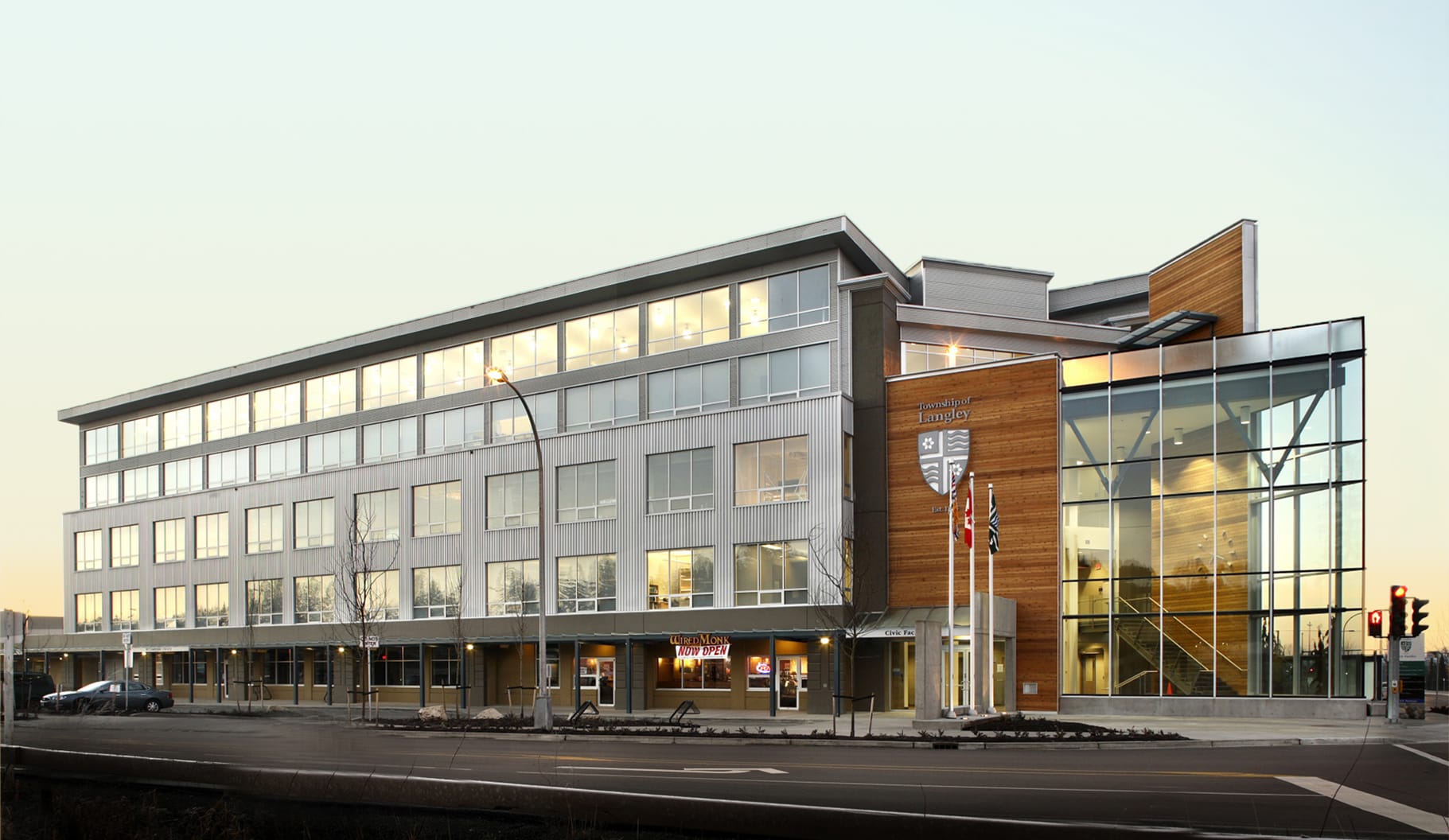
The Township of Langley council is set to approve a new housing rule on June 29 that will let 470 small lots in Willoughby host up to three or four homes each, instead of the current limit of two.
The change affects a zoning category called Residential Compact Lot, Semi-Detached, or R-CL(SD) for short. These are small parcels that hold side-by-side duplex homes, with each half owned as a separate property.
There are 470 such lots in the Township, making up roughly 235 duplex pairs, and all of them are located within the Willoughby Community Plan area.
Under Bylaw No. 6233, lots up to 280 square metres will be permitted to have three homes; larger lots will be permitted to have four.
The Township is not making this change on its own initiative. Last December, the provincial government passed Bill 25, which amended the Local Government Act (the law that governs how municipalities operate in British Columbia) to require that duplex lots be allowed to host what the province calls small-scale multi-unit housing, or SSMUH. Cities and townships have until June 30 to comply.
The same provincial law also forbids municipalities from holding a public hearing on these specific bylaws, which is why Township staff are asking council to pass all four required readings at a single meeting (rather than the usual practice of spreading them across multiple meetings) and to move ahead without an in-person hearing.
Residents can submit written comments instead.
On paper, if every property was fully built out, the change could add up to roughly 990 homes across the 470 lots. Township staff say that is unlikely. Most of these duplexes were built within the past ten years and still have decades of useful life left in them.
Many are also bound by a kind of legal restriction known as a Section 219 restrictive covenant, which is registered against the property title and blocks owners from converting their garage into living space or making the interior renovations needed to add a secondary suite.
The new rules also raise the height limit on duplex homes from 2.5 storeys to a full three storeys, while keeping the overall cap at 9 metres. Accessory dwelling units, which are smaller secondary homes typically built above a detached garage, will now be treated the same as garages for setback rules (how far a building must sit from property lines).
A duplex home that adds two accessory dwelling units will need to provide four off-street parking spaces.
Staff are also closing a side door at the same time. Any new lots that get rezoned to R-CL(SD) in future applications will be capped at 280 square metres, so they cannot stretch to four units.
Developers wanting to build on larger parcels will be directed to two related zones, called R-CL(A) and R-CL(B), which allow strata ownership (similar to a condo), require buildings to cover less of the lot, and remain subject to the Township's design rules for multi-unit housing.
The full bylaw and the accompanying staff report are available for inspection at the Civic Facility on 65 Avenue, or online at tol.ca/hearing, through June 29. Residents who want to weigh in can email written comments to legservicesinfo@tol.ca by noon that day. The meeting itself streams at tol.ca/councilstream.
Editorial analysis: This is likely the kind of zoning change that looks bigger on paper than it will feel on the ground.
The province has done the heavy lifting by closing the door on public hearings that often slow these reforms down, and by extending multiplex rights to duplex lots.
The real brakes in Willoughby, though, are private and legal: the restrictive covenants stamped on most property titles, and the simple fact that almost all of these homes are too new to tear down or substantially renovate. Council can adopt every word of the provincial framework and still see only a handful of new homes built on these lots over the next decade.
The bigger near-term win is for the roughly 50 larger lots in this zone that have not yet been built out, where a four-home footprint is legally available from day one.
Also worth flagging is the parking requirement. Demanding four off-street stalls on a four-home lot works out to roughly one car space per household, which on a parcel under 375 square metres leaves little room for backyards, permeable ground, or trees once the cars are housed.
Read the Report to Mayor and Council
Federal Probe Into Grocery Giant Empire Expands Nationwide

A Federal Court has issued an order expanding a Canada-wide investigation into Empire Company, the parent of Safeway and IGA, over whether its property control practices are harming retail grocery competition.
The probe targets the kind of restrictive covenants and lease agreements that major grocery chains use to prevent competitors from opening nearby stores, effectively locking out alternatives in communities that desperately need them.
For shoppers in Langley and across the Fraser Valley, where grocery costs remain a persistent pressure on household budgets, the investigation speaks to a larger question: how much control should a handful of corporations have over where Canadians can buy food?
Empire, which also operates FreshCo and Foodland, joins Loblaw on the receiving end of federal scrutiny into anti-competitive grocery real estate practices. The Competition Bureau has been increasingly active on the grocery file since the 2023 affordability crisis put corporate concentration under a spotlight.
NEXT TUESDAY: Langley senior society hosting pre-Canada Day BBQ

The Langley Senior Resources Society is throwing a pre-Canada Day community barbecue on Tuesday, June 30, with admission by donation and everyone welcome.
The event runs from 11 a.m. to 2 p.m. at the society's centre at 20605 51B Avenue.
Guests can expect hotdogs, burgers, and A&W root beer floats, alongside a live performance by Steve Elliot and a display of classic cars. The on-site Tuk Shop thrift boutique will also be holding a sale.
Senior Helpers is sponsoring the event, with A&W covering the barbecue and floats.
More details are available at lsrs.ca or by calling 604-530-3020.
Tech and privacy experts raise alarm over three federal privacy bills

Three federal bills working their way through Ottawa would significantly change what governments and police can see, store, and demand about Canadians' online lives, and the people sounding the loudest alarm are not partisans but privacy lawyers, civil liberties groups, the federal government's own oversight body, and the technology companies that build the tools Canadians use every day.
The package consists of Bill C-22 (the Lawful Access Act, tabled in March) and Bill C-34 (the Safe Social Media Act, tabled June 10).
Each was introduced with goals most Canadians would support: modernizing police investigative tools and protecting children online.
The concern from experts is what the bills do in combination, and what their fine print enables.
What the bills would do
Bill C-22 is the centrepiece. It would lower the legal standard police need to obtain subscriber information from "reasonable grounds to believe" (the threshold that has governed Canadian criminal production orders for a decade) to "reasonable grounds to suspect," which is the lowest investigative standard in Canadian criminal law.
It would also require a broad category of "electronic service providers" to build and maintain real-time interception capabilities that police and CSIS could plug into, and would mandate up to a year of bulk metadata retention by those providers.
Metadata is not the content of a message, but the record of who you contacted, when, from where, for how long, and on what device.
Bill C-34 creates a new Digital Safety Commission with authority over social media platforms and AI chatbots, including age and identity verification requirements that would, in practice, build new databases of who is using which service. Experts warn these bills could eventually require people to upload a photo of their government ID just to use social media.
A separate companion bill, C-36, would strip the federal Privacy Commissioner of authority over private-sector privacy law and hand it to the same five-member Commission, putting both content moderation and personal data oversight under a single body.
Why this matters for ordinary people
For most Canadians, none of this sounds like it touches daily life.
Unfortunately, it does.
The same encryption that protects activists and journalists also protects every online banking transaction, every prescription refilled through a pharmacy portal, every password stored in a manager, and every text message between family members.
Once a system is engineered to allow a "good actor" through, that same opening exists for any sufficiently skilled attacker.
The cybersecurity community has been blunt about this for years: there is no known way to build a backdoor that only the intended party can use.
The metadata retention mandate is similarly broad. A year-long log of who every Canadian talked to, when, and from where, is, by definition, surveillance at scale, regardless of whether anyone reads it on any given day.
As former U.S. National Security Agency director Michael Hayden once put it, "we kill people based on metadata."
Intelligence agencies have long argued that the pattern of communication is often more revealing than the content of any single message.
The expert chorus
This is also the kind of legislation that depends on civil society and subject-matter experts to translate. Most Canadians do not read criminal-procedure schedules for fun, and even fewer have the background in cryptography, telecommunications law, or signals intelligence to evaluate what a single technical clause in a 200-page bill actually requires of an internet provider.
The consequences of those clauses can take a specialist hours to unpack. When experts in those fields begin warning publicly, in unison, that something is wrong, that consensus itself is news.
That consensus is what the past few months in Ottawa look like.
Signal has threatened to leave Canada.
Toronto-based VPN provider Windscribe has announced it will relocate its headquarters out of the country.
NordVPN is hedging its Canadian operations. Apple, Meta, Proton, ExpressVPN, and the Canadian Chamber of Commerce have raised concerns.
The Canadian Civil Liberties Association, OpenMedia, the Electronic Frontier Foundation, the Office of the Privacy Commissioner, the Canadian Bar Association, law professor Michael Geist, the Canadian Labour Congress, and the Ligue des droits et libertés have each filed substantive critiques.
The National Security and Intelligence Review Agency, Ottawa's own watchdog over national security activity, told the Standing Committee on Public Safety it does not currently have the access it would need to effectively oversee the powers in C-22.
The chairs of the United States House Judiciary and Foreign Affairs Committees have written to Ottawa warning that the bill threatens American national security interests, an unusual cross-border intervention from allies on a domestic Canadian file.
Editorial analysis: Democracy depends on a working division of labour.
Voters cannot personally read every bill, audit every algorithm, or reverse-engineer every interception standard tucked inside a piece of national security legislation.
That is precisely why an ecosystem of privacy commissioners, civil liberties lawyers, cryptographers, journalists, and watchdog agencies exists. When that ecosystem is roughly unanimous, as it is here, the appropriate response from ordinary Canadians is not to wade into the technical fight on its own terms but to take the signal seriously and engage their elected representatives on it.
The case for moving fast on these bills is the case most governments make when they want to enlarge what they can see: police are losing ground to encryption and predators target children online.
Each of those points is real.
The case the experts are making is that the architecture being built to address those problems will outlast any particular government in Ottawa, and that once interception capability and bulk metadata retention are baked into Canada's communications infrastructure, no future Parliament will easily remove them.
The companies threatening to leave the country, the watchdogs being asked to oversee powers they say they cannot oversee, and the lawyers spending unpaid hours filing committee briefs are not crying wolf.
They are doing the part of the work most people cannot do for themselves.
The question worth raising with a member of Parliament before these bills clear committee is not whether police should ever be able to read a warranted communication, but whether a permanent surveillance backbone is a price Canadians want their grandchildren to inherit.
Bandits to host Winnipeg on Filipino Heritage Night

The Vancouver Bandits will host the Winnipeg Sea Bears on Saturday, June 27 at the Langley Events Centre for the team's annual Filipino Heritage Night.
Tip-off is set for 6 p.m. on the Envision Financial Court.
The game continues a tradition the Bandits launched in 2024 and grew in 2025, when local designer Edmond Santelices created a custom jersey that wove indigenous Filipino tattoo patterns and folklore symbols into the club's familiar fox mascot.
Last year's edition also paired the basketball with Filipino food, cultural performances, and a halftime show, and raised money for families affected by the Vancouver Lapu Lapu Day Festival tragedy.
Game-night programming and ticket information are available through the Langley Events Centre, or thebandits.ca
Langley Sends Player and Coach to International Softball Championship
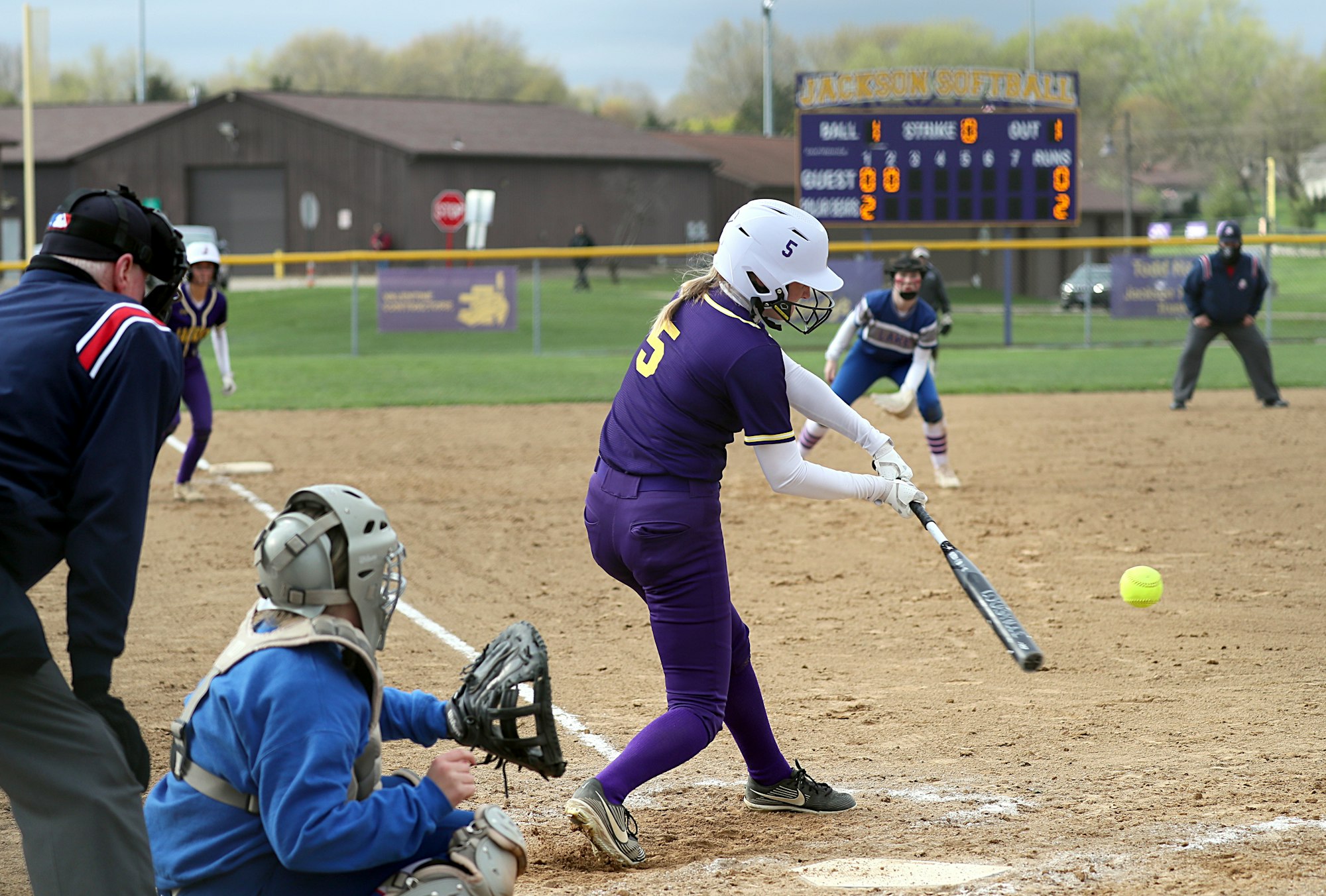
Langley will be represented on the international stage after a local player and coach were named to the rosters for two Canadian teams heading to the International Softball Championship.
The roster announcements are a testament to the depth of softball talent in the community and the dedication of local athletes and coaches alike.
Vancouver Giants Reveal Preseason Schedule, Including Home Game at New Langley Events Centre Arenas

The Vancouver Giants have announced their 2026-27 WHL preseason schedule, and it includes a home game at the brand new Arenas at Langley Events Centre, which is set to open this fall.
The G-Men kick off their preseason on the road with two games in Everett on Sept. 4 and 6 before hosting the Victoria Royals for back-to-back games on Sept. 12 and 13. The Sept. 13 matchup will christen the new Langley facility with a 2:00 PM puck drop.
The full WHL regular season schedule for 2026-27 is expected to be released next week.
Giants Sign Highly Ranked Defenceman Brady Leinenweber

The Vancouver Giants have signed 2011-born defenceman Brady Leinenweber to a WHL Scholarship and Development Agreement after selecting the Kerrobert, Sask. native 26th overall in the 2026 WHL Prospects Draft.
Leinenweber was ranked 7th overall on Elite Prospects' Top 120 list for the draft and was named a CSSHL U15 Prep first-team all-star this past season, recording 35 points (2G, 33A) for Northern Alberta Xtreme.
Elite Prospects described the right-shot blueliner as "the most projectable defender in this class," praising his puck distribution, shot fakes, and professional-level precision from the back end.
"I'm so excited to be signing with such a great organization," Leinenweber said. The agreement guarantees him a WHL scholarship for every season he plays in the league.
What did you think?
Help us improve! Take a quick 60-second survey to share your thoughts on this article.
Take the Survey