

The best way to help The Langley Union grow is simple: share this newsletter. Forward it to a friend, mention it to your family, or post it on social media and encourage others to subscribe.
Almost three out of four new students entering Langley schools over the next decade will live in apartments, townhouses, or condos. Those homes are already going up. Whether the streets around them are safe enough for kids to walk and ride to school is still up to local councils.
The numbers come from a Langley School District report on the School Site Acquisition Charge, broken down this week by reporter Matthew Claxton in the Langley Advance Times.
SD35 worked with both the Township and the City to project where new students will live over the next 10 years, and the breakdown tells a clear story.
Of the roughly 7,339 new school-aged children expected by 2036, 48 per cent will live in townhouses, 21 per cent in condos, and three per cent in rowhouses. Just 27 per cent will live in single-family homes.
In the City, the shift is even sharper. Nearly 90 per cent of new students there will live in condos or townhouses.
This reflects a Langley that has already changed. Detached suburban housing once defined Walnut Grove, Murrayville, and Aldergrove. But rising prices have pushed single-family ownership out of reach for most young families. The new growth is happening in Willoughby and Yorkson in the Township, and along the 200 Street corridor and the future SkyTrain stations in the City.
That clustering matters. Hundreds of new students will live in the same buildings and the same neighbourhoods. They will walk out of the same lobbies in the morning and head toward the same schools.
The question is what kind of street they will step onto.
A Clear Infrastructure Gap
In much of Willoughby, sidewalks end before the next development begins.
Painted bike lanes on 208 Street and 72 Avenue sit inches from vehicles moving at 60 km/h or faster.
Crossings at 200 Street, 80 Avenue, and 208 Street force kids to wait through long signal cycles, then move across multiple lanes of turning traffic.
Several collector roads serving new strata developments have no protected cycling infrastructure at all.
The City has its own gaps. The 200 Street corridor, which is absorbing much of the new condo growth, remains designed for cars first. Sidewalks exist but are narrow and exposed. Crossings between residential blocks and schools cut through fast-moving traffic.
The result is predictable: parents who do not feel safe letting their kids walk or roll to school drive them instead.
The flood of vehicles around schools at 8:30 a.m. and 3 p.m. then makes the streets even more dangerous for the kids who are walking or biking. The cycle reinforces itself.
The Bike Bus: A Proven Model, Already in Langley
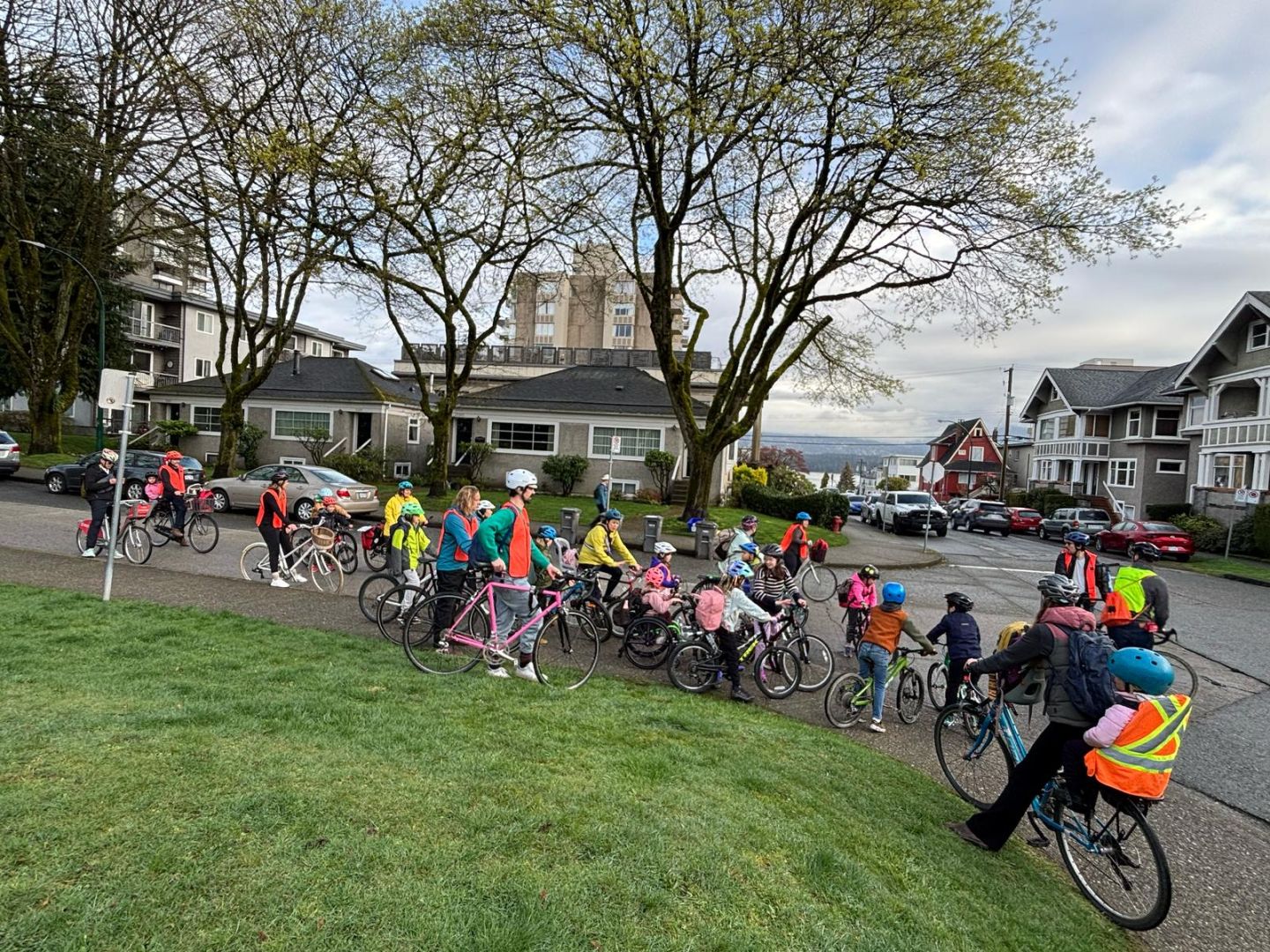
A bike bus is a group of kids who ride to school together along a planned route, with adult volunteers leading and supervising the ride.
It runs like a regular bus, with a set departure time and stops along the way where more children can join. Kids pedal under their own power. Parents walk or ride alongside.
The benefits stack up fast:
- Kids arrive at school awake, exercised, and ready to learn.
- They build confidence and independence by traveling on their own steam.
- Parents save money on fuel and stop sitting in the morning drop-off line.
- Schools see less idling traffic and cleaner air around their grounds.
- The neighbourhood gets quieter streets, fewer near-misses at crosswalks, and a regular, visible reminder that streets belong to people.
- Community ties grow between parents who meet each other on the ride and kids form friendships across grade levels.
Last summer, we profiled the Belmont Bike Bus, a parent-led group ride that has been getting kids to Belmont Elementary every Friday morning. Founder Nathan Tiessen described the loop he is trying to break in plain terms.
"Parents don't feel like it's safe for their kids to walk or bike to school, so they drive them, so there are more cars around the school, so parents don't feel like it's safe for their kids to walk or bike to school," Tiessen said. "I'd like to help break that loop."
The Belmont ride uses a simple structure borrowed from the Portland teacher who started the modern bike bus movement. A captain leads from the front and calls out instructions at intersections. A sprinter rides in the middle and darts ahead to block traffic when needed. A sweeper rides at the back so no child gets left behind. Kids as young as four take part. Those who cannot pedal the whole route ride part of the way on a cargo bike.
The Belmont Bike Bus runs through quiet residential streets in Brookswood, where wide shoulders and tree cover make the route workable. But Brookswood is mostly single-family.
The denser parts of Langley, where the next thousands of students will actually live, do not yet have streets safe enough to support that kind of ride at scale.
Density Makes Bike Buses Better, Not Harder
The math of bike buses works best when lots of kids live close together.
A single mid-sized apartment building can house dozens of school-aged children. A cluster of townhouses across the street adds even more. Group those buildings within a reasonable distance of an elementary school, and a bike bus stops being a niche project and starts being the most efficient way to get kids to class.
It also turns drop-off into something other than a traffic jam. Parents who walk or ride alongside the group meet each other. Kids learn the route, build confidence, and arrive at school awake and ready. The whole arrangement does what the morning car line cannot. It builds community while it builds health.
On top of the Belmont bike bus, HUB Cycling now runs bike buses at several schools across Metro Vancouver, including programs in Vancouver, Surrey, and Saanich. A school in Aldergrove is also preparing to launch one. The Province is funding the model through the Society for Children and Youth of BC's Walking School Bus Initiative.
What Needs to Happen
The school district's projections are not optional. The kids are coming.
What the City and Township still control is whether their streets meet those kids where they live. A short list of practical steps would make a measurable difference.
Build out School Streets programs. Close the block in front of a school to private vehicles during drop-off and pick-up. Cities across Europe and a growing number in Canada already do this. The result is an immediate drop in collisions and an immediate rise in walking and rolling.
Install protected cycling infrastructure on the collector roads serving Willoughby, Yorkson, and the 200 Street corridor. Painted lines next to fast traffic do not protect children. Concrete curbs or bollard-separated lanes do.
Extend 30 km/h zones beyond the school frontage to the surrounding network of streets that kids actually use to get to school. Slowing cars for 50 metres in front of the building, then letting them speed back up around the corner, does not match how kids travel.
Install yellow-flashing crossing signals paired with elevated, speed-bump style crossings in front of every school. Raised crossings force drivers to slow down whether they want to or not. Combined with flashing pedestrian-activated signals, they give kids a clear, visible way to cross safely without depending on driver attention. The infrastructure is well established and proven. Langley's schools should not have to keep waiting for it.
The Langley School District should partner with HUB Cycling to bring a bike bus to every school in the district. HUB already runs trained bike bus programs at schools across Metro Vancouver and has the curriculum, the safety protocols, and the staff to support implementation at scale. SD35 has the relationships with parents, principals, and school grounds. A formal partnership would turn a handful of parent-organized rides into a district-wide program, with consistent training, equipment, and route planning across every elementary and middle school.
The City and the Township need to remove every baffle gate on their multi-use paths. Baffle gates are the metal barriers installed at path entrances, usually meant to slow cyclists or block off-road vehicles. They do neither job particularly well, and they create real accessibility problems. Parents pulling kids in a child trailer cannot get through them. Long-tail cargo bikes, the exact kind families use to ride together to school, get stuck. Wheelchair users, parents with strollers, and seniors with mobility aids face the same problem. A barrier that blocks a parent on a cargo bike but does nothing to stop a dirt bike is not safety infrastructure. It is an antiquated hand-me-down design that needs to go ASAP.
Complete the sidewalk network in Willoughby. Several developments still terminate at unfinished frontages. Every gap is a place where a parent decides to drive instead.
Add secure, covered bike parking at every elementary, middle, and secondary school. Kids will not ride if there is nowhere safe to leave their bike for the day.
Coordinate route planning between SD35 and municipal engineering. The school district knows where the new students will live. Engineering departments know what streets need upgrading. Aligning that information should not be hard.
The Belmont Bike Bus shows what is possible when one parent decides to organize.
Apartment density in Willoughby and along the 200 Street corridor offers something Brookswood does not. Dozens of kids will live within a five-minute walk of each other, all heading to the same school.
That is not a problem to solve. It is an opportunity, if the streets get built to match.
References and Further Reading
 Matthew Claxton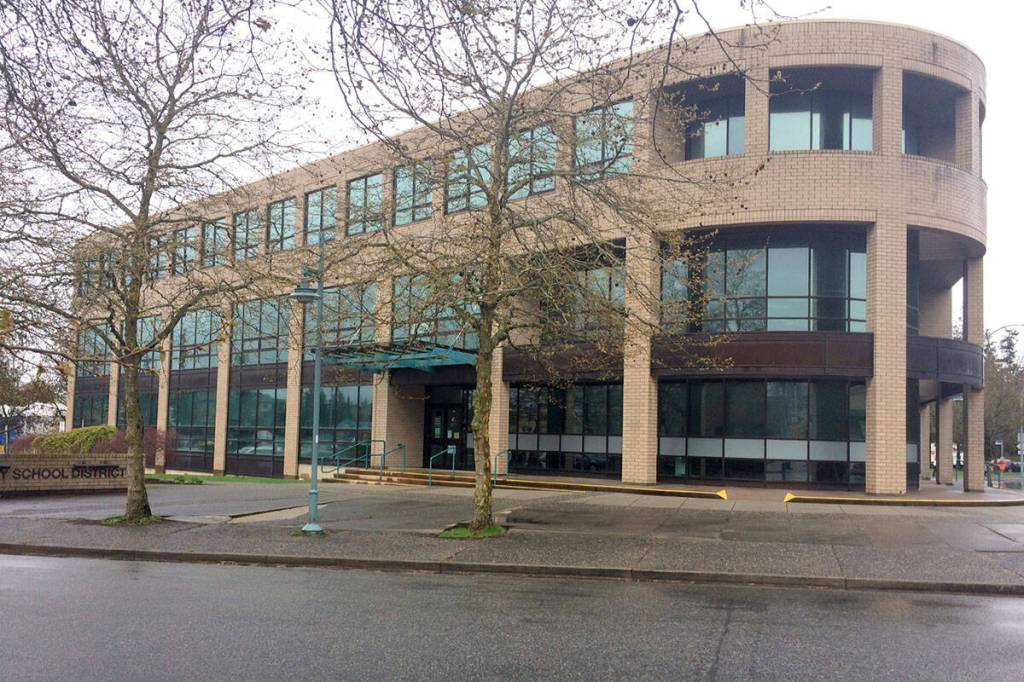
 Rainer Fehrenbacher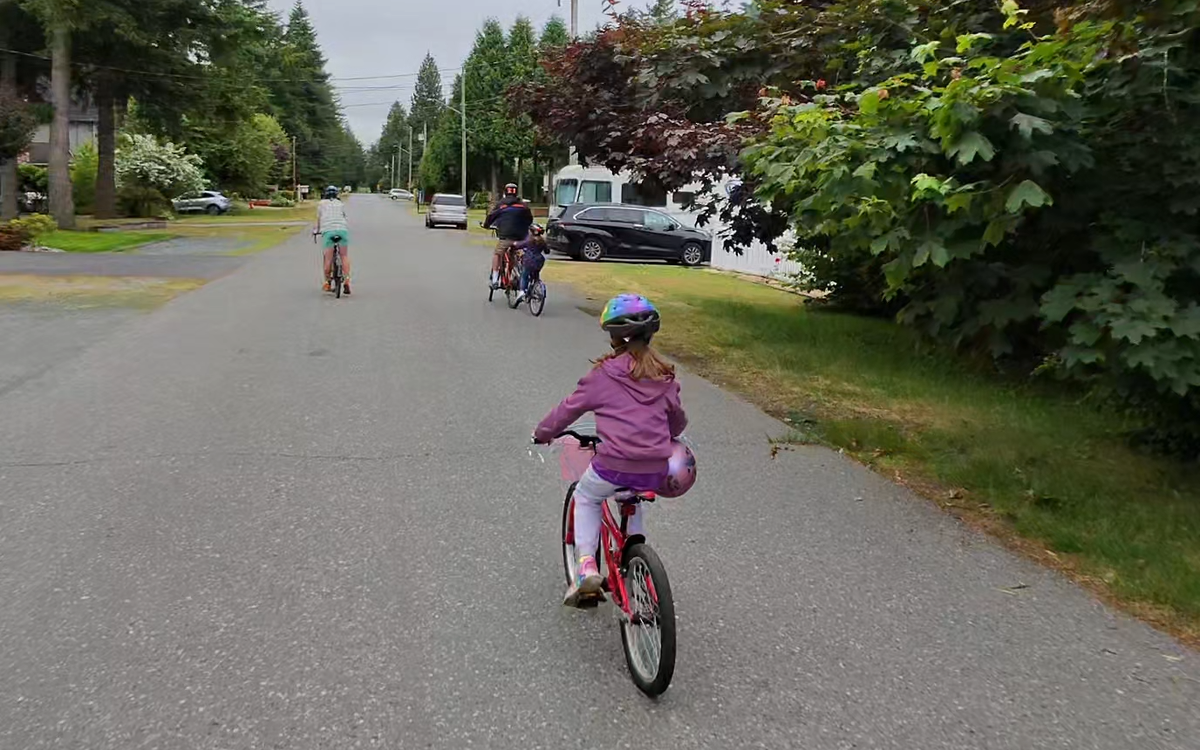
What did you think?
Help us improve! Take a quick 60-second survey to share your thoughts on this article.
Take the Survey