

Table of Contents
By now, most of you know the broad strokes.
Since December 2025, the Trump administration has sent thousands of federal agents into Minneapolis and the surrounding Twin Cities area as part of what it called Operation Metro Surge, billed as the largest immigration enforcement operation in American history.
Over 3,000 people have been arrested. Two US citizens, Renee Good and ICU nurse Alex Pretti, were shot and killed by federal agents in the street. A third, Julio César Sosa-Celis, was shot in the leg in North Minneapolis.
The operation cost Minneapolis over $200 million in January alone, wiped out $81 billion in local business revenue for the month, and sent school attendance plummeting as families were too afraid to leave their homes.
You know this. You've been watching.
What you may know less about is what the people of Minneapolis have been doing about it.
And that part of the story matters a lot to us here in Langley.
The Resistance, in Detail
The resistance in Minneapolis has not looked like what the media shorthand of "protest" typically suggests.
It has not been marches alone, though there have been tens of thousands of people in the streets. It has been something more total, and more instructive, than that.
Coffee shops and bookstores across the city have left baskets of free whistles on their counters so anyone can grab one and alert their neighbours to the presence of federal agents.
Activists carved the words "ICE OUT" into the frozen surface of Lake Nokomis in giant letters, then lit them up with luminaries so the message could be read from planes landing at Minneapolis-St. Paul International Airport.
Volunteers drove grocery deliveries to families too afraid to leave their homes, and were trained to swallow their delivery lists if stopped by agents.
Rapid response networks timed their average response across Minneapolis at around seven minutes. In South Minneapolis specifically, that number dropped to two minutes. Federal agents noticed. Organizers reported that ICE began shifting its operations to the suburbs and outer areas, and to later hours at night, precisely because the friction in South Minneapolis had become too costly. When communities make themselves hard to operate in, the calculus changes.
The resistance organized itself into layers.
There were the frontline rapid responders, who showed up on sidewalks and followed federal vehicles.
There were legal observers.
There were lawyers filing habeas petitions in real time to stop detainees from being moved out of state.
There were school parents organizing car pools for families who couldn't risk the trip.
There were high school teachers keeping a watchful eye for federal agents outside their buildings, and there were business owners at coffee shops and bookstores who left out baskets of free whistles for anyone who wanted one.
There were volunteers fixing doors that had been broken down in raids, and delivering meals to exhausted rapid responders.
There were youth development organizations setting up rapid relief funds for emergency rent, utilities, groceries, and school-related needs, reaching families through trusted intermediaries like sports coaches and school administrators.
On January 23, over 1,000 people of faith led a nonviolent action at the Minneapolis-St. Paul International Airport, protesting ICE deportation flights. With temperatures well below zero, 100 people were arrested as hundreds of others offered support.
After Renee Good was killed on January 7, the crowds grew. After Alex Pretti was killed on January 24, they grew again. The editors of The Nation nominated Minneapolis and its people for the Nobel Peace Prize, writing that the city's moral leadership had set an example for those struggling against fascism everywhere.
This is what community defense looks like when it is working.
It is also worth noting what the resistance has run up against.
Legal observers have been led to their home addresses while following ICE. People who monitor federal operations have had their Global Entry and TSA travel privileges revoked. Federal agents have broken car windows to drag observers out of their vehicles.
Minnesota's chief US District judge found that ICE violated at least 96 court orders in the state since January 1, 2026. A separate federal judge found that the overwhelming majority of cases brought to him involved people who were lawfully present in the United States. The administration opened criminal investigations into the governor and the Minneapolis mayor. It subpoenaed the offices of democratic officials who publicly criticized the operations.
And still, people went back out.
This Is Not Contained to Minneapolis
It would be comforting to think of Minneapolis as an isolated case. It is not.
ICE surge operations have been recorded in Washington DC, Memphis, Nashville, Atlanta, Charlotte, New Orleans, Las Vegas, Los Angeles, Philadelphia, Newark, Boston, Chicago, Detroit, Indianapolis, and elsewhere.
The pattern is consistent: operations targeting sanctuary jurisdictions, cities whose elected leaders do not politically align with Trump. When DHS announced its next major operation, "Catch of the Day," in Maine, it explicitly cited the governor's sanctuary policies as the justification.
The message is not subtle. Comply or be targeted. And the targeting is not limited to immigrants. It extends to anyone who shows up to bear witness, to document, to stand between a neighbour and the agents sent to take them away.
This is what authoritarianism looks like in its middle phase.
Not the moment of arrival, which is dramatic and obvious, but the grinding normalization that follows, where the state dials back just enough to shift the narrative, and what remains is recast as routine.
The Canadian Parallel
From across the border, Canadians have been watching all of this.
And last spring, in the federal election of April 2025, we collectively said something about it.
Pierre Poilievre had spent years building a political identity that borrowed heavily from the MAGA playbook. He aligned himself with the Freedom Convoy. He adopted the populist grievance politics, the institutional contempt, the culture war framing. He was widely described, without much exaggeration, as "Maple MAGA."
One Conservative voter put it plainly: "Listening to Poilievre speak, it's like talking points from Trump. It just reeks of what's happening south of the border."
For a year and a half, the Conservatives led the Liberals by as many as 24 points in the polls.
A Poilievre government seemed all but inevitable.
Then Canadians looked south and saw what the thing they were about to vote for actually looked like in practice.
Poilievre lost not just the election but his own parliamentary seat, a riding he had held for more than two decades. He was the first Conservative leader to lose his seat since Kim Campbell in 1993. Lifelong Conservatives crossed over to vote Liberal for the first time in their lives.
That is a historic rebuke. It matters.
And it is not enough.
Because the MAGA project does not stop when it loses an election. It recalibrates. It finds new vessels. It waits.
And right now, there are still elected officials across Canada, including right here in the Fraser Valley, who have politically aligned themselves with MAGA's worldview, or who parrot its talking points without ever quite saying the name.
Those people need to be named.
 Rainer Fehrenbacher
Their alignment needs to be called out, not just online, but in conversations with friends and family, at community meetings, at the dinner table.
The Poilievre election showed that Canadians will reject MAGA when the stakes are made clear enough.
Our job, as a community, is to make the stakes clear before there is a crisis that forces the question.
We need to go wider and deeper than we did even in that historic election. We need to make the rejection of MAGA a community norm, not just a ballot outcome.
Langley's Networks Are Already Being Built
Here at home, something is taking shape that is directly relevant to all of this.
Langley City's Citizens' Assembly on Community Safety ran through much of 2025, bringing together 29 residents chosen by lottery and engaging over 3,100 people through forums, dialogue sessions, and neighbourhood conversations.
Council unanimously endorsed all seven of the assembly's recommendations, and Phase 1 implementation began in 2026.
The lead recommendation is the creation of Resilient Neighbourhood Networks: people-first neighbourhood hubs built around social connection, mutual aid, and emergency preparedness.
 Rainer Fehrenbacher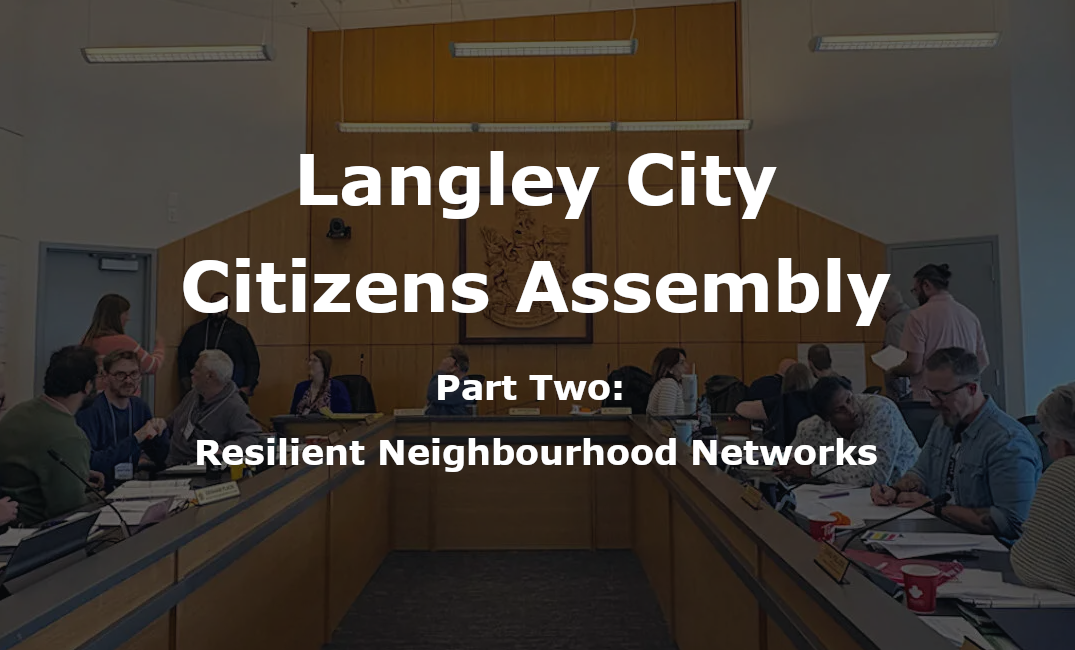
Read that against the backdrop of Minneapolis and the parallel becomes very clear. The rapid response networks that have made ICE operations costly in South Minneapolis were built, largely informally, out of the same raw materials.
Neighbours who knew each other. Community trust cultivated before the crisis arrived. Shared values around what it means to show up for the people around you. Communication channels, vetted and unvetted, that allowed ten people to materialize on a sidewalk in two minutes when someone needed help.
Langley City's Resilient Neighbourhood Networks are exactly that kind of infrastructure.
They exist to build the social fabric that makes a community resilient to all kinds of disruption, from natural disasters and public health crises to the slower, creeping disruptions of economic stress and political fear.
They are how strangers become neighbours and neighbours become people who will show up.
The organizers in Minneapolis did not build their networks when the crisis arrived. That is the critical lesson. They had the relationships. They had the trust. They had enough of a sense of shared purpose that, when the moment came, they could act.
The people who hesitated in Minneapolis, who felt unqualified to blow a whistle without attending a training first, those were the people who had not yet done the work of belonging to their community before the emergency.
We have the chance to do that work now, in a moment of relative calm, through the formal infrastructure of Resilient Neighbourhood Networks and through every informal act of community building that surrounds them.
There Is a Role for Everyone
One of the things the Minneapolis organizers said, repeatedly, is that everyone has a role.
Not everyone can tail federal vehicles or stand at the front of a crowd. But everyone can fix a door. Deliver food. Make a phone call. Donate. Show up to a vigil. Ask how a neighbour is doing.
And everyone can talk. That last one is both the simplest thing and the thing that people underestimate the most.
Data from the United States shows that anti-Trump protests are running at roughly four times the level they were at the same point in his first term. Low-information voters, people who don't closely follow political news, have swung from supporting Trump by 11 points to disapproving of him by 13 points.
These people largely don't consume political news directly. Their changing attitudes are a sign that the consequences of Trump's presidency are a topic of conversation among normal people.
That is how this works. Not through think-pieces. Through conversations. Through the person at the barbecue who says something that sounds like a MAGA talking point and encounters, for the first time, a calm and clear response from someone they trust: that's not what I see. Here's what I'm seeing instead. Here's what that actually leads to.
The resistance in Minneapolis is extraordinary in its courage and its scale. What is being asked of us in Langley right now is much smaller. Know your neighbours. Participate in the networks being built around you. Call MAGA what it is, by name, including when local and regional politicians echo its worldview. And refuse to let the normalization of cruelty pass through your community unchallenged.
The Lesson They Keep Teaching
The people of Minneapolis keep offering the same lesson in different forms.
Don't wait for the tragedy that galvanizes everyone. Don't wait until they kill someone before getting as angry as the moment demands. Build the community now. Build the relationships now. Make belonging to each other a practice, not an emergency response.
Langley is doing exactly that. The Resilient Neighbourhood Networks coming online through the City of Langley are real infrastructure for exactly this kind of belonging. They are not a response to a crisis. They are preparation for whatever comes next, and investment in the everyday texture of community that makes life better even when nothing is on fire.
As one Minneapolis organizer put it: "We belong to each other now in a way we weren't sure we could count on before, and Minneapolis is forever changed."
That is what we are building here too.
References and Further Reading
 Kelly Hayes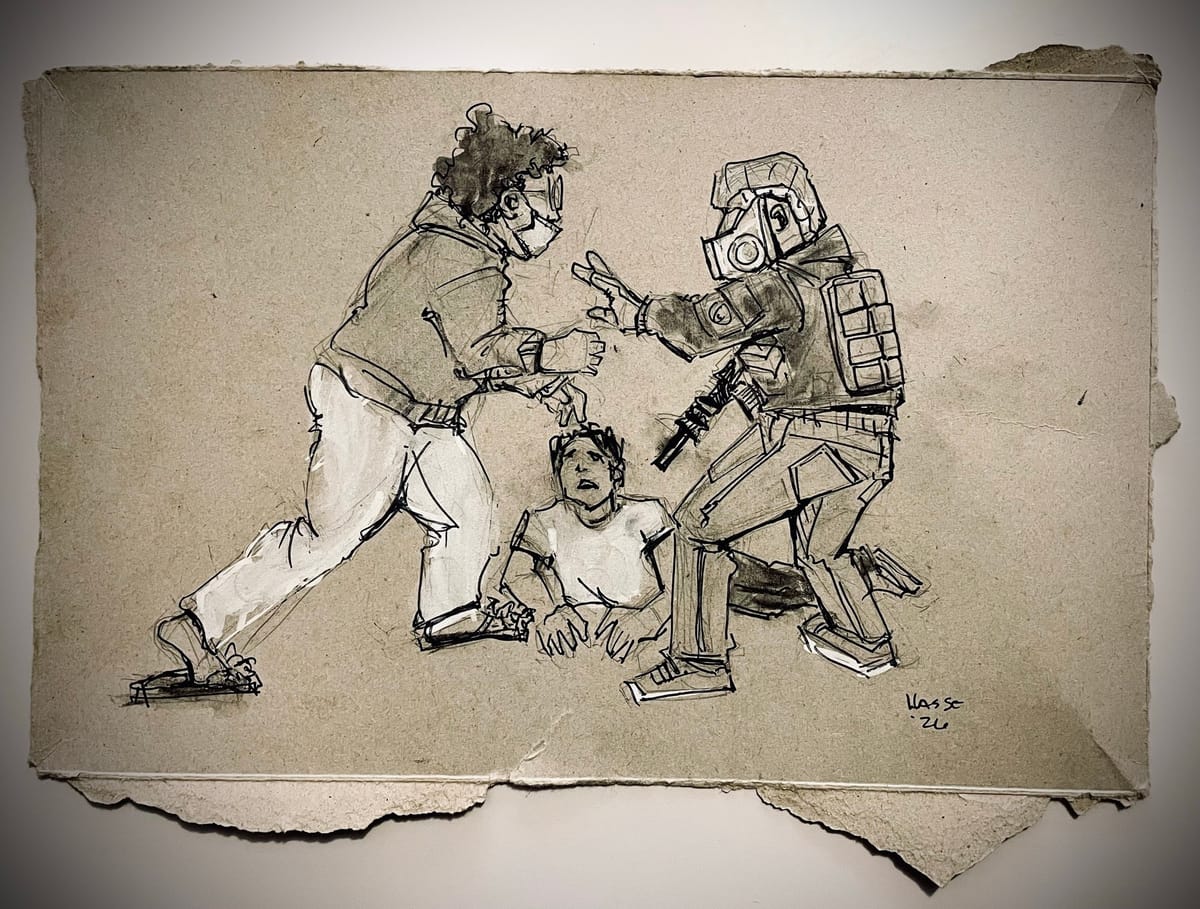
 Rebecca Solnit
 gabriel-furshong
 Contributors to Wikimedia projects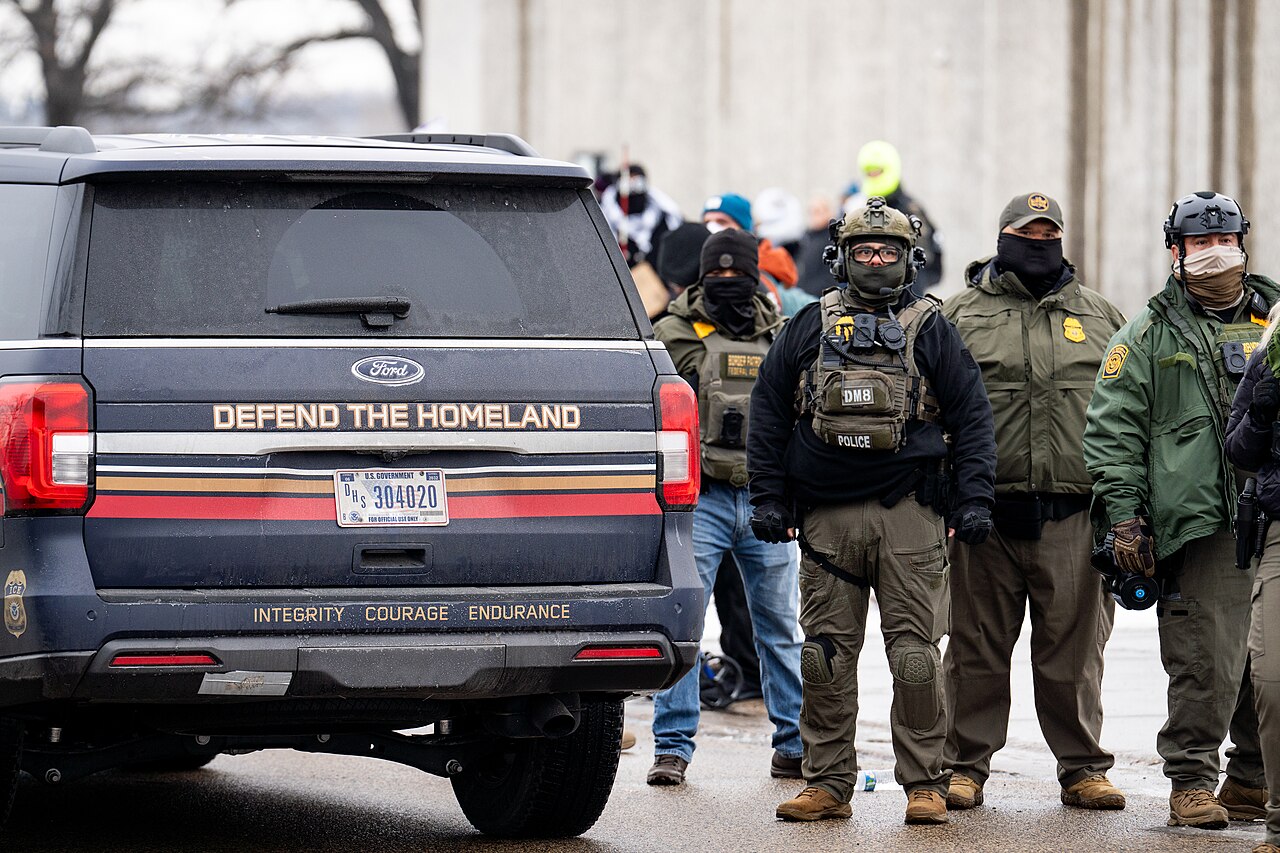
 Bluesky Streamline Icon: https://streamlinehq.comBluesky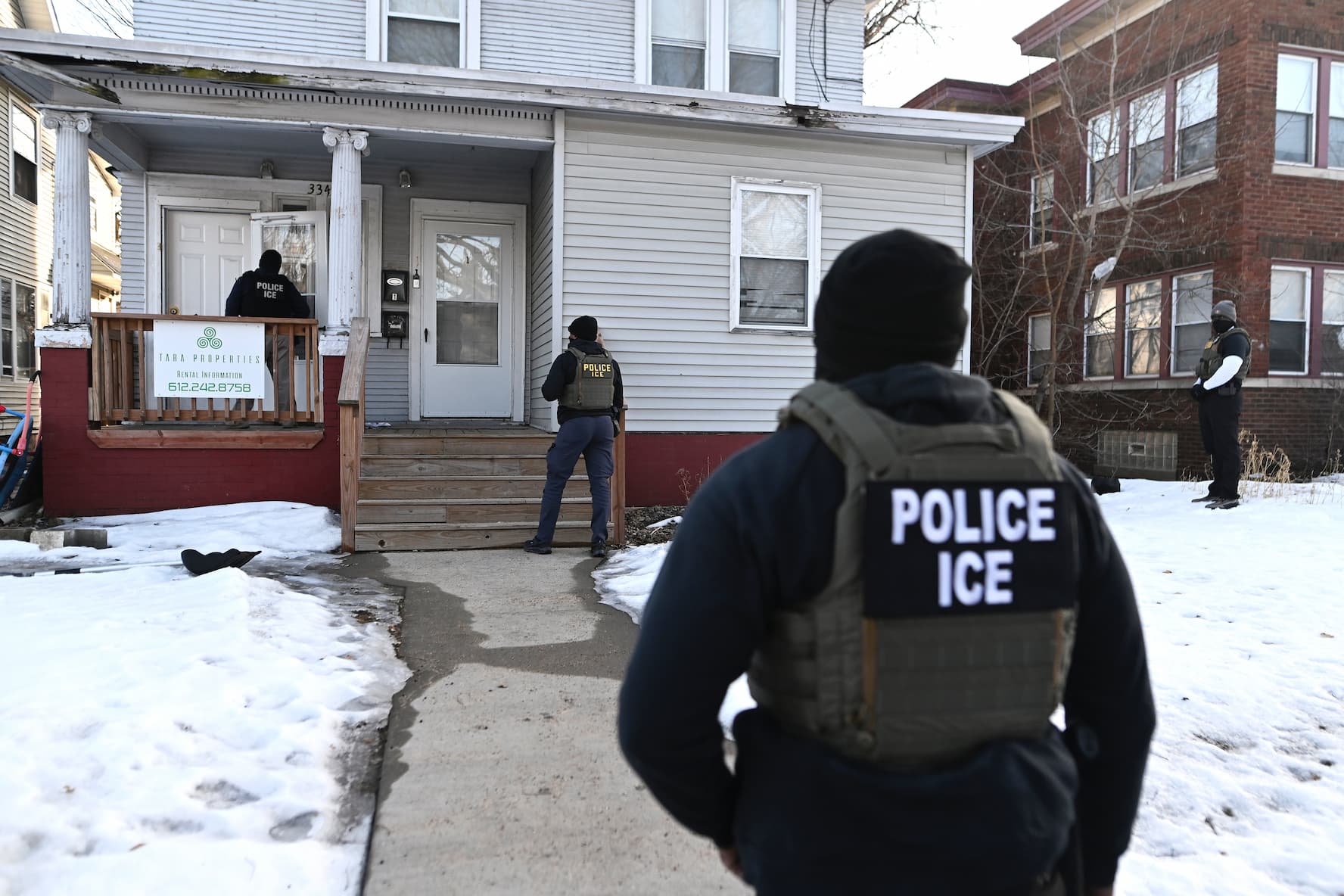
 Barbara Rodriguez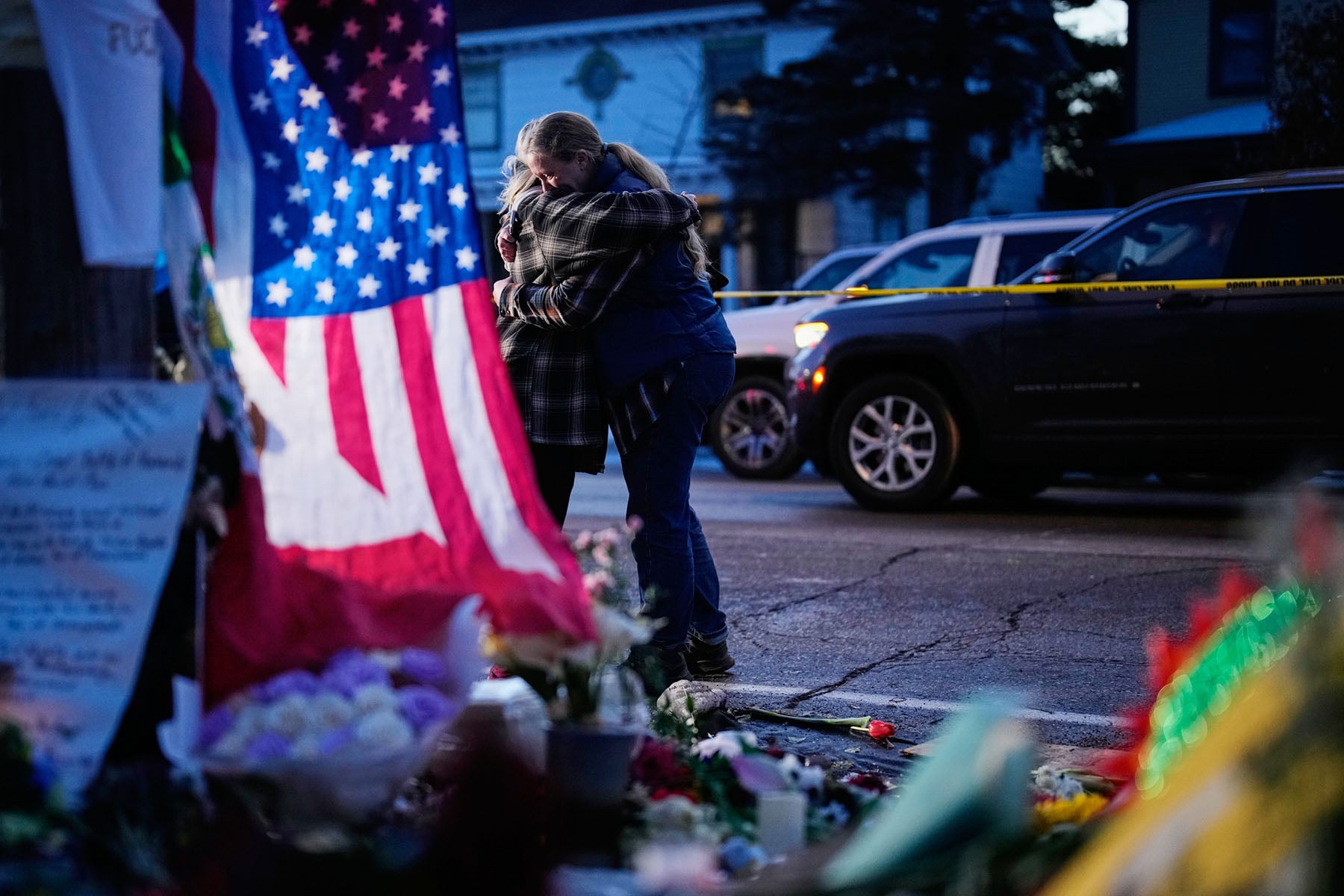
 Deborah Copperud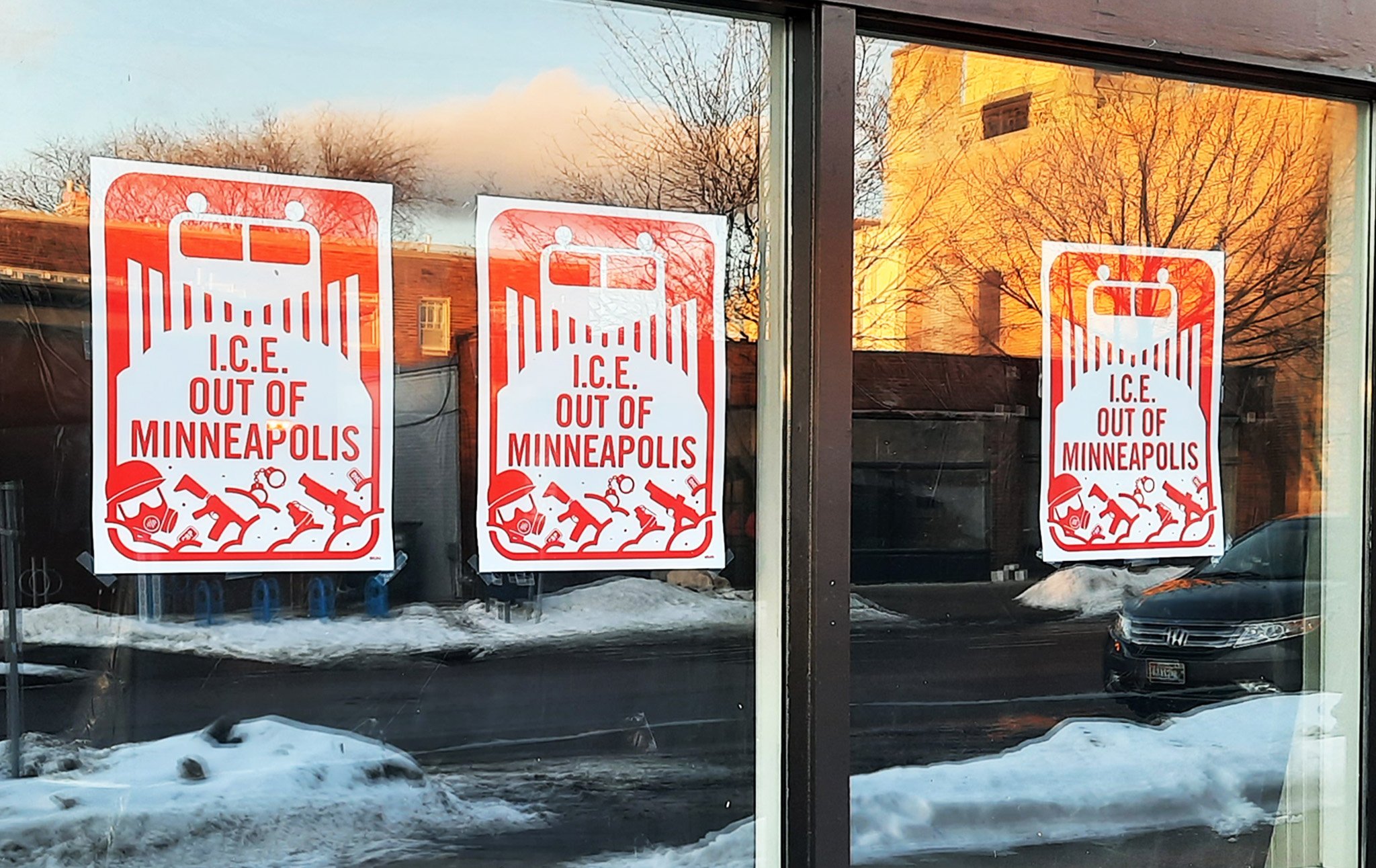
 Chantal Da Silva
What did you think?
Help us improve! Take a quick 60-second survey to share your thoughts on this article.
Take the Survey