

Table of Contents
An earlier version of this article stated that all three of Langley's Conservative MLAs voted in favour of first reading of the Human Rights Code Repeal Act.
After reviewing the official Votes and Proceedings of the Legislative Assembly, we have confirmed that Langley-Walnut Grove MLA Misty Van Popta was not recorded in either the Yeas or Nays on this vote, although she was present in the legislature later that same day.
We sincerely apologize to MLA Van Popta for the error.
The article has been revised to reflect the corrected record. For a more detailed account of this correction and how it came about, see our full correction notice.
On Feb. 26, independent MLA Tara Armstrong introduced the Human Rights Code Repeal Act in the B.C. Legislature.
The bill would have scrapped the entire BC Human Rights Code, eliminated the Human Rights Tribunal, and dissolved the Human Rights Commissioner's office. It was defeated 50-37.
But all 34 BC Conservative caucus members present for the vote supported, including two of Langley's three provincial representatives:
- Jody Toor (Langley-Willowbrook), and
- Harman Bhangu (Langley-Abbotsford).
Two of the three MLAs elected to represent our community lent their explicit support to a bill that would have legalized discrimination in housing, employment, and public services across British Columbia.
The third, Misty Van Popta, was absent from the vote without public explanation, which illustrates that Toor and Bhangu could have chosen to not to vote in favour of this bill.
What the Human Rights Code Actually Does (Including Protecting Religious Freedom)
The BC Human Rights Code is not some abstract piece of bureaucracy.
It is the legal foundation that stops a landlord from refusing to rent to a family because of their race. It prevents an employer from paying a woman less than a man for the same work. It protects people with disabilities from being denied services.
It shields workers from being fired over their religion, sexual orientation, or Indigenous identity.
And that word "religion" deserves special attention here.
The Code explicitly protects religious belief as a ground against discrimination in employment, housing, tenancy, services, and publications. A restaurant cannot fire a woman for wearing a religious head covering. An employer cannot refuse to accommodate a worker's Sabbath observance. A landlord cannot reject a tenant for being Muslim, Sikh, Jewish, or Christian.
This matters because many of the same conservative influencers and politicians who voiced support for Armstrong's bill have spent the last several months loudly positioning themselves as defenders of religious freedom at the federal level.
 Rainer Fehrenbacher
The federal Combatting Hate Act (Bill C-9) has become a rallying point for Conservative MPs and allied organizations like the Justice Centre for Constitutional Freedoms, who argue that proposed changes to hate speech law threaten people of faith.
Conservative leader Pierre Poilievre claimed the bill would "criminalize sections of the Bible, Quran, Torah, and other sacred texts." The JCCF warned of "criminal prosecutions against those who proclaim what their scriptures teach." Whether those federal concerns are legitimate or overblown is a separate debate.
But the hypocrisy of claiming to champion religious freedom in Ottawa while voting to gut religious freedom protections in Victoria is staggering.
Without the BC Human Rights Code, there would be no provincial legal mechanism to challenge an employer who fires a worker for wearing a cross necklace, a landlord who rejects a family for attending Christian Life Assembly (CLA), or a business that refuses service because somebody shows up wearing a Hillsong United t-shirt.
The very protections these Conservatives say they are fighting to preserve federally are the ones they voted to destroy provincially.
In a region like the Lower Mainland, where our neighbourhoods include gurdwaras, churches, mosques, and temples side by side, these protections are not theoretical.
They are the difference between a roof over your head and a rejection letter you can never prove was discriminatory.
Gutting the Code would leave almost every single person in our community, including evangelical Christians, with no legal recourse when they are treated unfairly.
The "Procedural Courtesy" Excuse Doesn't Hold Up
The Conservatives say this was just a routine first-reading vote. Interim leader Trevor Halford called it "tradition" and said the caucus wants to avoid "politicizing" first readings.
This explanation collapses under the slightest pressure.
Under former leader John Rustad, the same caucus voted against first reading of Dallas Brodie's bill to ban land acknowledgements and her bill to cancel the National Day for Truth and Reconciliation.
Those were far-right provocation bills too, and the Conservatives found their backbone then.
So what changed?
Under Halford, the party extended procedural courtesy to a bill that would strip human rights protections from every British Columbian, while previously refusing that courtesy to bills targeting Indigenous reconciliation. When the political cost was high under Rustad, they voted no.
Under Halford, they are waving through culture war legislation with a shrug and a talking point. They chose when to break convention. And this time, they chose not to.
The Conservative Argument Falls Apart on Its Own Terms
The JCCF published a widely shared article arguing for abolishing Section 7 of the Human Rights Code, the provision dealing with discriminatory publications.
 Julian Benedict
We're embedding this JCCF article for full transparency. It is not, strictly speaking, a good article. But it is the closest thing we found to a coherent argument that exists for this position, and we think you should see what passes for intellectual rigor in the 'abolish human rights protections' camp.
Their case rests on the $750,000 fine against former Chilliwack school trustee Barry Neufeld for years of anti-LGBTQ commentary. They frame this as a free speech crisis and call the Tribunal a "kangaroo court."
But their own article admits that Section 7 only covers speech. It does not touch discrimination in employment, housing, services, wages, or union membership.
Even if you accept the JCCF's narrow argument, Armstrong's bill was not a narrow fix. It would have repealed the entire Code. Every protection, every ground, every mechanism for redress. Gone.
The JCCF essentially argues that since federal Criminal Code prohibitions against hate speech would remain untouched, what's the big deal?
Well, what would vanish is the practical, day-to-day framework that lets ordinary people challenge discrimination at work, at the rental office, and in public services.
Even by the logic of its defenders, this bill was indefensible overkill.
A Question of Priorities
Langley families are dealing with a housing affordability crisis that gets worse every month.
Rents keep climbing. Wages are not keeping up. Healthcare is strained. Transit remains inadequate.
These are the fights our MLAs should be waging in Victoria.
Instead, our Conservative representatives are providing cover for a bill imported from the furthest fringes of the culture war.
This kind of divisive, wedge-issue posturing has more in common with American-style disinformation tactics than with the values of our community. It pits neighbours against each other while the real problems, the ones that keep people up at night, go unaddressed.
It is also worth noting that Jody Toor, who serves as Conservative caucus chair, has already faced serious questions about her own credibility.
 Rainer Fehrenbacher
Reporting by The Tyee revealed that her claimed doctoral credentials come from Quantum University, an unaccredited online institution in Hawaii whose own website disclaims that its degrees are not equivalent to medical or naturopathic doctorates.
This is the person serving as a senior voice in the Conservative caucus, lending her vote to dismantle human rights protections for millions of British Columbians.
Langley Deserves Representatives Who Show Up for Us
Our community sits on the unceded territories of the Kwantlen, Katzie, Matsqui, and Semiahmoo First Nations.
We are diverse and growing. South Asian, Indigenous, LGBTQ+, and working-class families live side by side here.
The Human Rights Code exists to make sure that diversity is protected in practice, not just celebrated in speeches.
Toor and Bhangu owe their constituents an explanation that goes beyond "it's tradition." Van Popta potentially owes hers an explanation for why she was absent when this vote was called.
We did not send them to Victoria to wave through the repeal of our fundamental rights as a procedural courtesy.
We sent them to fight for better healthcare, affordable housing, and a community where everyone is treated with dignity.
That is clearly not what we are getting.
References and Further Reading
 Colin Dacre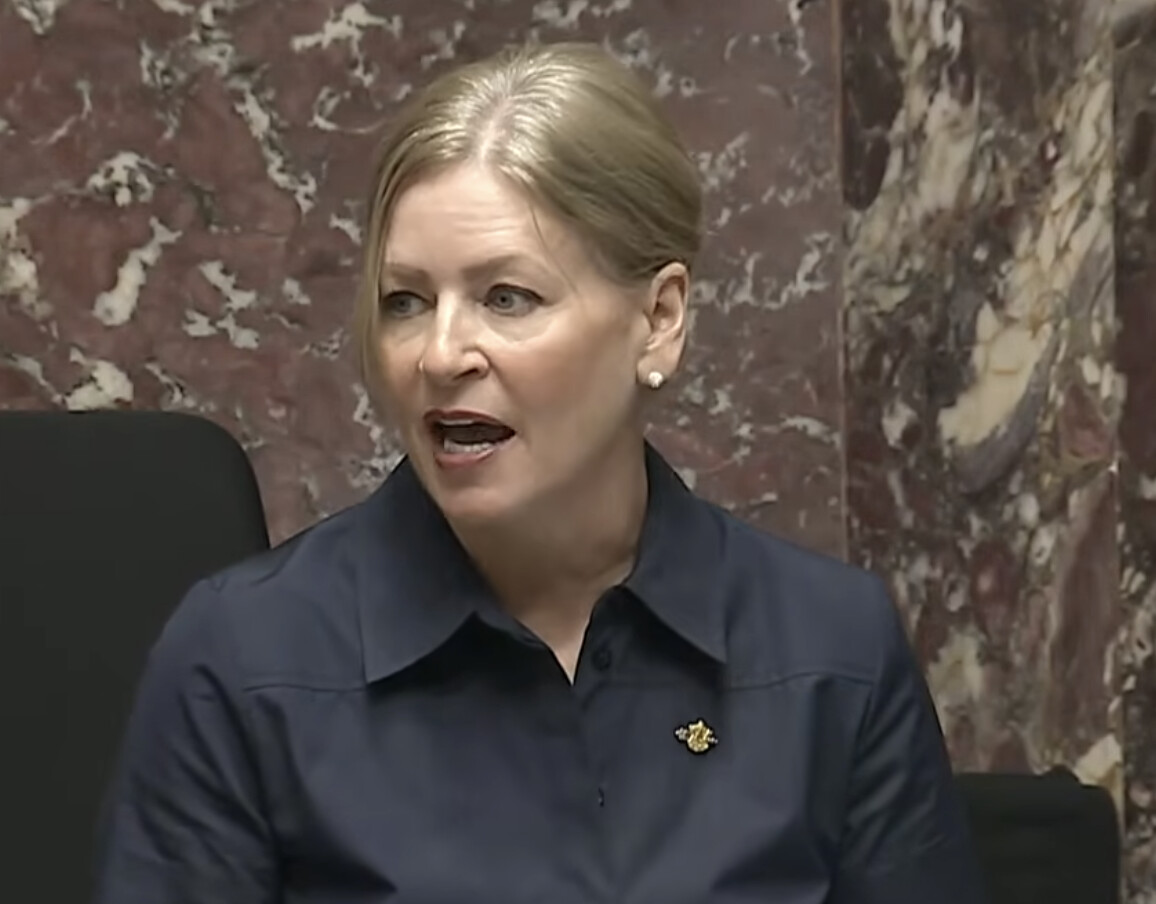
 posted by: Rattan Mall
 Freshet News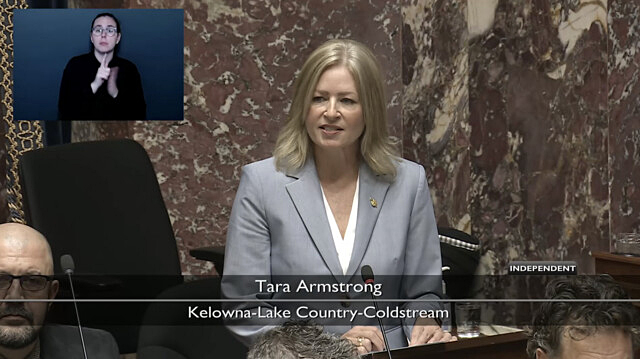


 CBC
CBC
 The Local Journalism Initiative
What did you think?
Help us improve! Take a quick 60-second survey to share your thoughts on this article.
Take the Survey