

Table of Contents
The best way to help The Langley Union grow is simple: share this newsletter. Forward it to a friend, mention it to your family, or post it on social media and encourage others to subscribe.
Picture a narrow sidewalk in downtown Langley City. A senior on a motorized scooter rolls along at 18 km/h. A parent pushes a stroller in the opposite direction. A teenager on an e-kick scooter weaves between them.
Nobody is breaking the law, because the law barely exists.
This is the situation that Langley City Councillor Paul Albrecht wants the province to fix.
On Monday, Council unanimously approved a motion calling on the BC government to create a new class of personal mobility and micro-mobility devices in the Motor Vehicle Act.
The goal is simple: get these devices off sidewalks and onto bike lanes and traffic-calmed roads, where they can operate .
Albrecht didn't mince words about the current state of things, calling it "the wild west."
And he's right. BC's Motor Vehicle Act is decades out of date. It was written for a time when the choices were car, bus, bike, or feet. It has no idea what to do with the wave of electric devices that now fill our sidewalks.
The province does have an electric kick scooter pilot project, renewed in 2024 and running until 2028. Around 30 communities are participating, including the Township of Langley, which joined in June 2024.
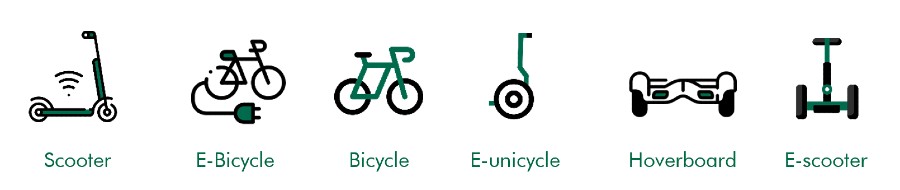
But the pilot only covers e-kick scooters. It says nothing about electric wheelchairs, motorized mobility scooters, electric skateboards, or any of the other devices that people already use every day.
The result is a patchwork of rules that is nearly impossible for police to enforce and for cities to plan around.
Seniors deserve better than this
The people most affected by this regulatory gap are often the most vulnerable. Today's powered mobility scooters commonly reach speeds of 14 to 22 km/h. That is far too fast for a sidewalk shared with pedestrians, young families, and small children. But under current provincial rules, that's exactly where these devices are supposed to be. Electric wheelchairs and mobility scooters are not allowed in bike lanes.
Think about what that means in practice. A senior who relies on a powered scooter to stay independent and connected to their community has no legal option but to share space with pedestrians on narrow sidewalks. They have to navigate curb letdowns, uneven surfaces, and busy crosswalks, all while creating exactly the kind of conflict that Albrecht described.
The Langley Senior Resources Society has been serving adults over 50 in the City and Township since 1982. Their mission centres on empowering seniors to socialize, learn, and enjoy life. Independence and safety are core values. But independence means nothing if the infrastructure forces you into dangerous situations every time you leave home.
Albrecht's motion would change this by allowing powered wheelchairs and mobility scooters to use bike lanes and traffic-calmed roads. Other provinces figured this out long ago. Quebec has allowed similar devices on roadways for decades.
Teens on scooters aren't the problem. Cars are.
It's easy to look at teenagers zipping around on e-kick scooters and see a nuisance.
They're fast, they're quiet, and yes, they sometimes ride where they shouldn't. A BCAA survey found that 91% of BC residents have witnessed speeding in school zones, and frustration with unregulated scooter use is real. These concerns are valid.
But here's what often gets lost in the conversation: every teenager riding a scooter to school is one fewer car sitting in a drop-off line.
School traffic congestion is a serious and growing problem.
A 2025 CAA survey found that more than 80% of Canadian parents have noticed increasing congestion at school drop-off. The data describes a vicious cycle. More cars around schools create more congestion.
More congestion leads to more frustrated drivers making poor decisions. That makes the area less safe, which convinces even more parents to drive their kids instead of letting them walk or ride.
And the cycle repeats.
This plays out right here in the Langleys. West Langley Elementary actively encourages families to "bike, scooter, run or walk" to school, specifically because of the traffic jams that form out front every morning.
The Township adopted 30 km/h school zone speed limits on school days across 22 schools, a clear acknowledgment that car traffic around schools is a safety problem.
Banning or discouraging e-scooters doesn't solve this. It makes it worse.
If you take away a teenager's scooter, you don't get a teenager who walks. You get a parent who drives.
And that parent's SUV takes up a lot more road space, burns fossil fuels, and creates exactly the kind of congestion and danger that everyone says they want to reduce.
The answer isn't fewer scooters. It's better infrastructure and clearer rules that give scooter riders a safe place to go.
Build for people, not just cars
This is where Langley City's motion connects to a bigger picture.
Advocacy groups like HUB Cycling have been pushing for years for safe, connected networks that serve all types of users. HUB's Langley committee has documented the gaps in local cycling infrastructure, from multi-use paths that end abruptly at a gravel ditch to bike lanes that sandwich riders between merging cars.
Langley City has made real progress.
The protected bike lanes on Glover Road, the multi-use path on 208th Street, and the bike lanes on 203rd Street are exactly the kind of infrastructure that could safely accommodate mobility scooters, e-kick scooters, and e-bikes alike.
But the infrastructure only works if the rules allow people to use it.
Right now, a senior on a powered wheelchair is not legally permitted to use those bike lanes. That's absurd. And a teenager on an e-scooter faces a confusing jumble of rules that change from one municipality to the next.
Albrecht's motion asks the province to fix both problems at once by creating consistent, province-wide standards for all personal mobility and micro-mobility devices. It's a practical, common-sense request.
What happens next
The motion will go to the Lower Mainland Local Government Association (LMLGA) conference in Whistler at the end of April.
If the membership endorses it, the resolution moves on to the Union of BC Municipalities convention in September, where it would be formally presented to the province.
This matters because LMLGA represents 30 local governments and three regional districts, covering about 60% of BC's population. Langley City Councillor Paul Albrecht serves as the association's president, which gives the motion a strong champion.
But motions and resolutions are only as powerful as the political will behind them. The province has known for years that the Motor Vehicle Act is out of date. The e-scooter pilot was a step forward, but it was a half measure. It left out powered wheelchairs, mobility scooters, and dozens of other devices that people already rely on.
Langley City is asking Victoria to stop treating micro-mobility as an experiment and start treating it as the future.
Because on the sidewalks of this small city, the future is already here.
And right now, it's a mess.
References and Further Reading
 Nathan Pachal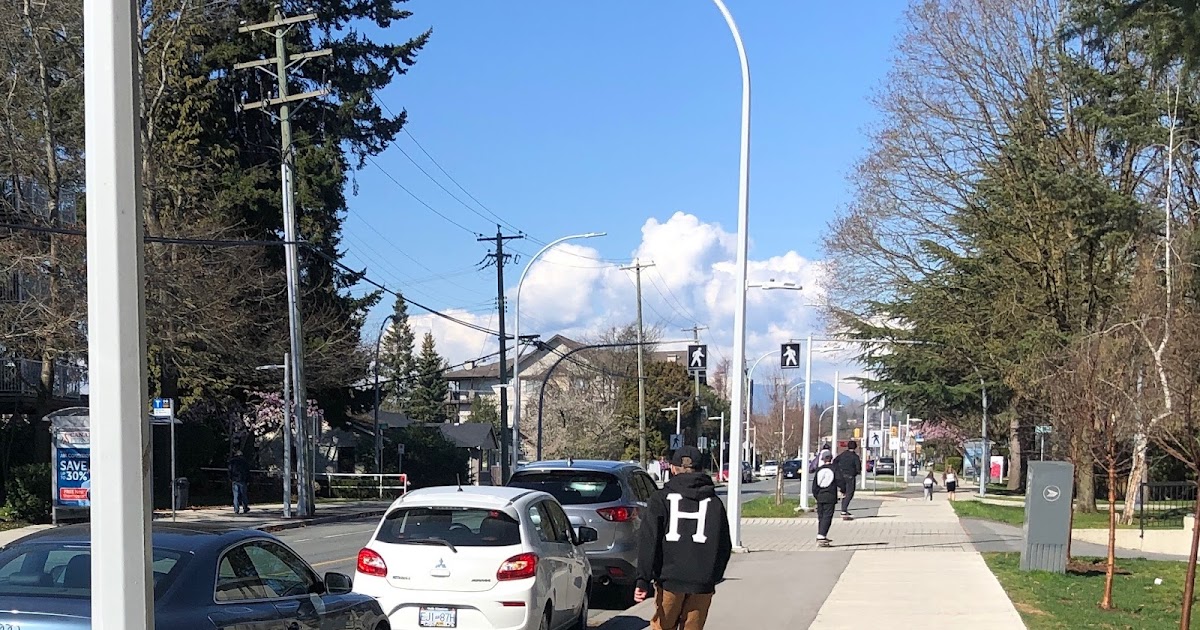
 Dan Ferguson





 Matthew Claxton
What did you think?
Help us improve! Take a quick 60-second survey to share your thoughts on this article.
Take the Survey