

Table of Contents
The best way to help The Langley Union grow is simple: share this newsletter. Forward it to a friend, mention it to your family, or post it on social media and encourage others to subscribe.
Langley City has struck a deal with the Langley Animal Protection Society for animal control services, but dogs will be housed at commercial kennels rather than LAPS's Patti Dale shelter.
The decision has drawn swift criticism from Township Mayor Eric Woodward, marking yet another chapter in what has become known as the War of the Langleys.
The new arrangement and its costs
Under the agreement approved by City council on Monday, January 26, two LAPS animal control officers will handle enforcement within City limits.
However, dogs picked up in the City will be placed at commercial kennels, while cats will continue going to the Patti Dale shelter in Aldergrove.
City Councillor Delaney Mack cast the lone vote against the commercial kennel arrangement. She argued the matter should be referred back to staff to work with LAPS and the Township to continue using the Patti Dale shelter.
"I have maybe a little bit more confidence given the context and understanding of the Patti Dale Animal Shelter and our familiarity with them," Mack said. "With the commercial kennel proposal, we don't have information on the contractor."
City Mayor Nathan Pachal defended the decision, stating commercial kennels would cost less and provide the same level of care under LAPS guidance. A staff report cited "additional cost and unpredictability of future capacity issues" in recommending commercial kennels over the Patti Dale facility.
According to Pachal's blog, the City's animal control costs will rise from $42,627 to $230,902 annually, while dog sheltering increases from $86,937 to $95,674. The changes will require approximately a 0.3 percent tax increase next year.
How the Township created this situation
The arrangement represents the latest development in a saga that began last September when the Township of Langley terminated its 23-year contract with LAPS for animal control services.
That decision followed a court case involving a pitbull named Enzo, where a seizure warrant was ruled invalid on technical grounds despite the court finding LAPS officers acted reasonably.
After ending the animal control contract, the Township brought enforcement in-house with bylaw officers and negotiated a new deal with LAPS limited to sheltering services.
Crucially, the new Township contract requires permission from Township council before dogs from outside the Township can be housed at Patti Dale.
After the Township ended the longstanding LAPS contract and imposed permission requirements on shelter access, relying on the their goodwill for dog sheltering may have seemed like an unacceptable risk to City officials.
Woodward's swift criticism
Minutes after Pachal posted the cost breakdown online, Township Mayor Eric Woodward issued a sharp rebuke of the City's decision.
"It is my opinion that City of Langley Council has put politics before animals," Woodward's statement read. "It must be made clear that moving in this direction, reducing the standard of care for animals, is entirely the doing of mayor and council in the City of Langley, absolutely not the Township of Langley."
Woodward insisted LAPS could provide service for City animals at Patti Dale under the Township's new contract. "Their new contract with the Township of Langley effective January 1st, 2026, only requires that it request permission, and I made it clear to City of Langley council that permission would be granted by our council here."
The Township mayor's statement arrived with notable timing and force.
His swift criticism, issued within minutes of Pachal's blog post, suggests he was closely monitoring the City's council proceedings and prepared to respond immediately.
The rapidity of his rebuke and its coordinated messaging raises questions about whether Woodward had advance knowledge of the decision and Councillor Mack's dissent.
Part of a broader pattern
The LAPS dispute follows a pattern of escalating conflict between the two municipalities that has come to be known as the War of the Langleys.
In September 2025, Woodward told CBC News he wanted "the greater Langley area" to discuss "are we being well served with two municipalities," effectively signaling interest in what would amount to the functional annexation of Langley City into the much larger Township.
The timing of Woodward's push for amalgamation coincides with the Township facing one of the highest municipal debt loads in British Columbia, potentially approaching $500 million in coming years according to Strong Towns Langley analysis.
Meanwhile, Langley City brings in $6 to $8 million annually from Cascades Casino revenue and stands to benefit greatly from SkyTrain-related development.
City Mayor Pachal has been direct about what he sees as Woodward's motivations.
"Mayor Woodward has told me that he wants the casino revenue," Pachal told reporters in September, "and I know the Township has one of the highest debt levels in the province, so it's not surprising that he's looking at getting that for his community."
Before the LAPS contract dispute, Woodward's council voted to end the shared RCMP detachment that had served both communities for decades, a move that will force Langley City to establish separate police facilities and absorb significant new costs.
The amalgamation playbook
Some observers have connected these moves as deliberate attempts to increase the City's operating expenses and create conditions favorable to amalgamation arguments.
Woodward has registered an elector organization to run candidates in this year's Langley City municipal elections.
If those candidates materialize, the increased costs imposed on the City through the Township-initiated RCMP and LAPS restructuring could provide convenient talking points for an amalgamation pitch framed around fiscal efficiency.
Whether such arguments would also acknowledge that City taxpayers would absorb responsibility for repaying hundreds of millions in Township debt remains to be seen.
Historical context matters
The historical context matters.
In 1955, Langley's central business area voted 74 percent in favor of separating from the Township after rural interests consistently denied requests for urban infrastructure like paved roads, sewage systems, and streetlights.
The two communities have remained divided for 70 years, with the City prioritizing dense, walkable development while the Township emphasizing sprawl and car-centric planning across its much larger rural and suburban territory.
For many City residents, separation remains an advantage rather than a problem.
Amalgamation would drown out their voice in a larger municipality with fundamentally different priorities while saddling them with debt for infrastructure they neither wanted nor benefit from.
What about the animals?
What remains unclear is how the current LAPS dispute serves animal welfare in either municipality.
The Township created the conditions for this outcome when it terminated LAPS's animal control contract and restructured the relationship to require permission for non-Township dogs.
Now Woodward criticizes the City for adapting to those very restrictions.
The situation places LAPS in an awkward position. The organization will now handle animal control for the City after the Township dropped those services, but City dogs will go to commercial kennels rather than LAPS's own facility.
LAPS Executive Director Sarah Jones emphasized the benefits of the new arrangement, including two dedicated officers in Langley City providing "increased support and visibility within the community."
Whether this represents genuine concern for animal welfare or another salvo in the War of the Langleys may depend on which mayor you ask.
References and Further Reading
 Dan Ferguson
 Nathan Pachal
 CBC
CBC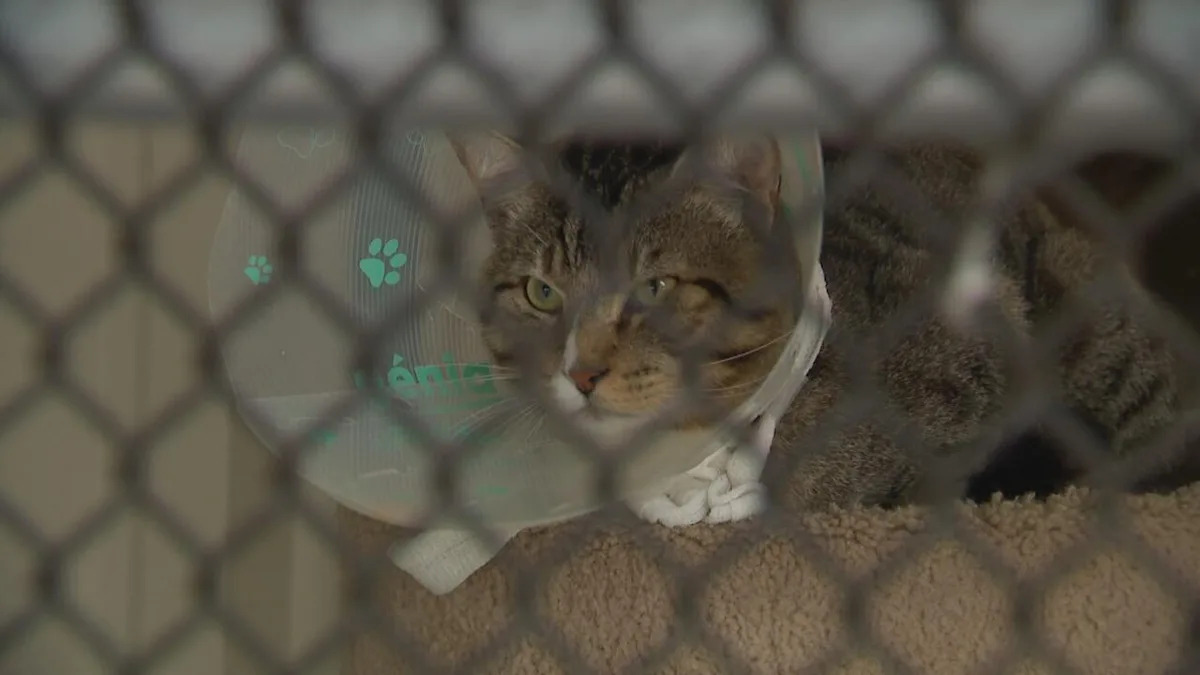
 Justin McElroy
What did you think?
Help us improve! Take a quick 60-second survey to share your thoughts on this article.
Take the Survey