
Table of Contents
The best way to help The Langley Union grow is simple: share this newsletter. Forward it to a friend, mention it to your family, or post it on social media and encourage others to subscribe.
You need help. You call the City. They tell you it is a bylaw issue.
You call Bylaw. They tell you it is a building inspection issue.
You call building inspection. They put you on hold.
This is the runaround. Almost everyone in Langley City who has tried to navigate local services has experienced some version of it.
And for residents dealing with more serious situations, involving mental health, housing instability, domestic safety, or substance use, the maze of agencies, departments, phone numbers, and intake forms can be the difference between getting help and falling through the cracks.
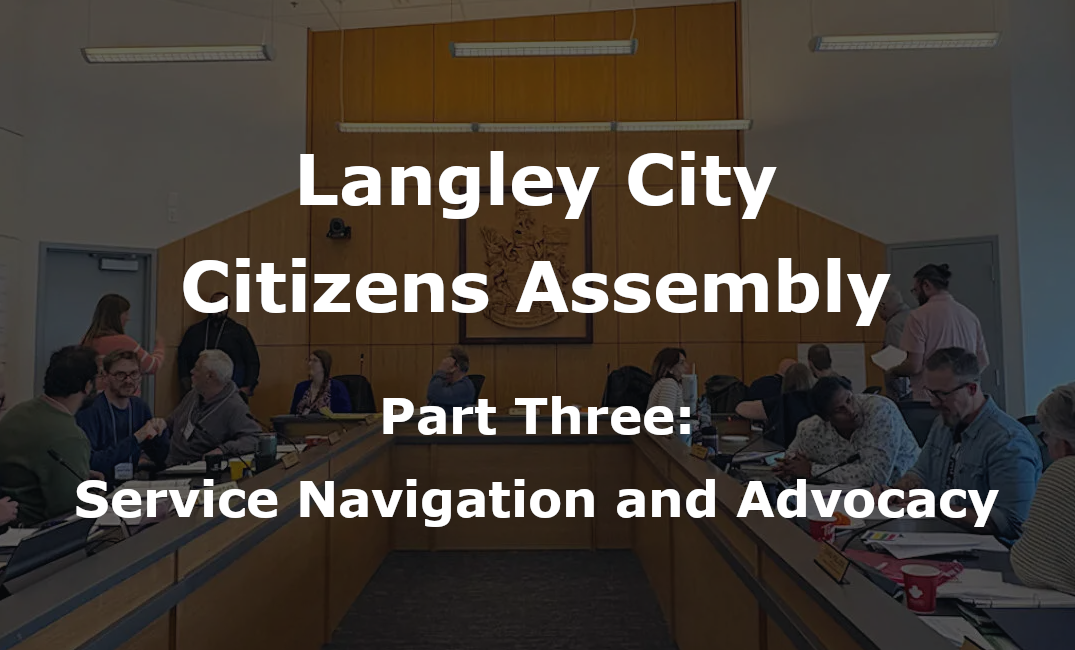
The Langley City Citizens' Assembly on Community Safety heard this, over and over, from residents, frontline workers, and service providers throughout its year-long process.
Their second formal recommendation, unanimously endorsed by Council on February 9, 2026, is a direct response: build an Advocacy and Service Navigation Framework that gives residents a clear front door into the system, with trained navigators who know where to send them and who follow up to make sure they actually get there.
The Problem Is Fragmentation
The framework addresses a reality that most people already understand from experience.
Public services in a community like Langley City are delivered by a patchwork of agencies operating at different levels of government, with different mandates, funding streams, and intake processes.
The RCMP handles some things. Fraser Health handles others. BC Housing, Service Canada, school districts, nonprofit agencies, and municipal departments each have their own scope, their own eligibility criteria, and their own waitlists.
For people in crisis, the fragmentation is not just frustrating. It is dangerous.
As Mayor Nathan Pachal explained on the South Fraser Blog, a 911 call for a domestic situation might have been handled differently if the people involved had been connected to a family support provider earlier in the process.
The Assembly's own findings echoed this. Community engagement showed that residents repeatedly had to tell their story to multiple agencies, with no single point of coordination and no one responsible for follow-up.
The result is predictable.
People give up. Calls for service increase. Emergency rooms and police officers absorb demand that could have been prevented or redirected.
The system spends more money and delivers worse outcomes.
What the Framework Actually Does
The Assembly's recommendation asks Council to endorse an integrated Advocacy and Service Navigation Framework anchored in a few principles:
- Housing stability and affordability are treated as core community infrastructure.
- Community members have access to trained service navigators who help connect them through referral pathways and coordinated services.
- The framework embeds advocacy to secure services from senior levels of government, while aligning the City's built, social, technology, and communications infrastructure for coordinated delivery and public reporting.
In practical terms, this means establishing citywide and neighbourhood access points, staffed by trained navigators who can provide what the Assembly calls "warm hand-offs."
Rather than giving someone a phone number and sending them on their way, a navigator would walk them through the referral process, coordinate between departments, and follow up to make sure the connection stuck.
The model is not theoretical. It builds on existing work already happening in Langley City.
Lu'ma Native Housing Society operates a Coordinated Access system using the Homeless Management Information System, known as CA-HMIS, which tracks referrals and outcomes for people experiencing homelessness.
Lu’ma Native Housing Society is an Indigenous housing non-profit, providing affordable housing to Indigenous families and individuals.
The Village Cafe Series and Solution Labs, both run as part of the Citizens' Assembly process, tested coordinated referral approaches and found that shared data and culturally safe navigation improved consistency and connection across local systems.
The recommendation takes what works in those targeted programs and proposes extending it to everyone in Langley City who needs help navigating public services.
Whether you are a senior trying to access home support, a newcomer looking for language services, a young person in a mental health crisis, or a business owner dealing with a bylaw issue, the framework envisions a single, clear entry point with someone on the other end who knows the system and will stick with you through it.
The Provincial Advocacy Challenge
The Assembly did not shy away from the political reality behind service delivery in a small city.
Many of the services that Langley City residents need, including health care, housing, income assistance, and social services, fall outside municipal jurisdiction entirely.
They are provincial or federal responsibilities.
The City cannot fund a mental health crisis team. It cannot build subsidized housing without senior government backing.
However, what it can do is advocate, and the framework builds that advocacy into its structure.
This is where the political landscape matters.
Under former MLA Andrew Mercier of the BC NDP, Langley City residents had a direct line into the governing party. Mercier, a labour lawyer and Langley City resident, served as Minister of State for Workforce Development and Parliamentary Secretary for Skills Training.
He helped deliver the Surrey-Langley SkyTrain extension, childcare expansion at Nicomekl Elementary, and funding for the Fraser Highway renewal.
He was, in the language of municipal politics, an effective advocate for the community's needs within the provincial government.
In the 2024 election, voters in the newly drawn Langley-Willowbrook riding elected BC Conservative Jody Toor, who defeated Mercier by roughly 870 votes.
Toor now serves as caucus chair for the BC Conservative opposition. But as a member of the opposition rather than the governing BC NDP, her ability to move the provincial levers that Langley City's service navigation framework depends on is structurally limited.
Opposition MLAs can ask questions and apply pressure. They cannot direct funding or shape ministry priorities from the inside.
This is not a criticism of any individual. It is a description of how provincial politics works in British Columbia.
And it means that Langley City Council's advocacy to Victoria for mandate, commitment, and funding to sustain the navigation framework will require creative coalition-building, strong data, and public pressure rather than a friendly phone call to a cabinet minister.
What Success Looks Like
The Assembly laid out a clear implementation path, subject to Council endorsement.
The City would develop the framework and establish access points with trained navigators. RCMP, Fire, Bylaw, Library, Recreation, and outreach teams would all have clear referral pathways into the system.
Technology and communications infrastructure would be aligned for coordinated delivery. And the City would report back to Council at 3, 6, 12, and 18 months on outcomes and lessons learned, published through the Healthy City Data Dashboard.
The Assembly also identified what early success should look like: fewer people bouncing between agencies, more completed referrals, reduced emergency service use for non-emergency needs, and increased access for populations that have historically been underserved, including seniors, newcomers, youth, Indigenous community members, and people experiencing homelessness.
It is an ambitious vision for a city of 35,000.
But the underlying logic is hard to argue with. When people know where to go for help, and when someone is there to guide them through the process, fewer people fall through the cracks.
The system works better. It costs less. And the community is safer for it.
The next article in this series will examine the Assembly's recommendation for Balancing Community Safety, Prevention, and Visibility.
References and Further Reading
Recording from the Citizens' Assembly presentation to City council regarding the Service Navigation and Advocacy recommendation
 Nathan Pachal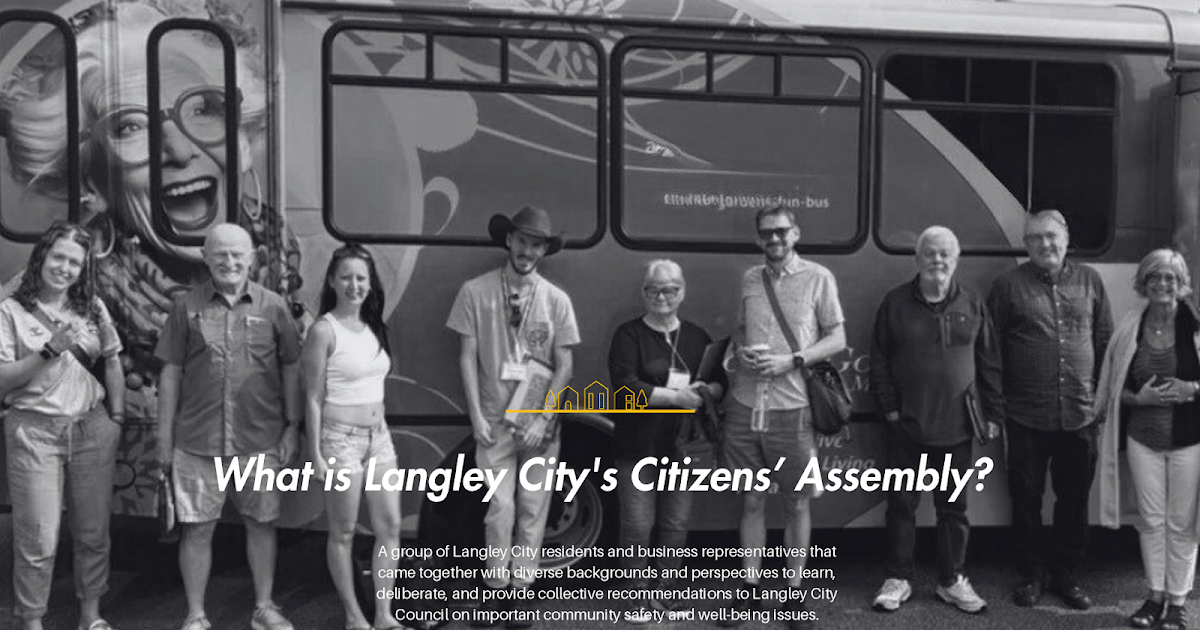
What did you think?
Help us improve! Take a quick 60-second survey to share your thoughts on this article.
Take the Survey