Table of Contents
The best way to help The Langley Union grow is simple: share this newsletter. Forward it to a friend, mention it to your family, or post it on social media and encourage others to subscribe.
TransLink is moving forward with plans for a Bus Rapid Transit line connecting Langley Township to Maple Ridge.
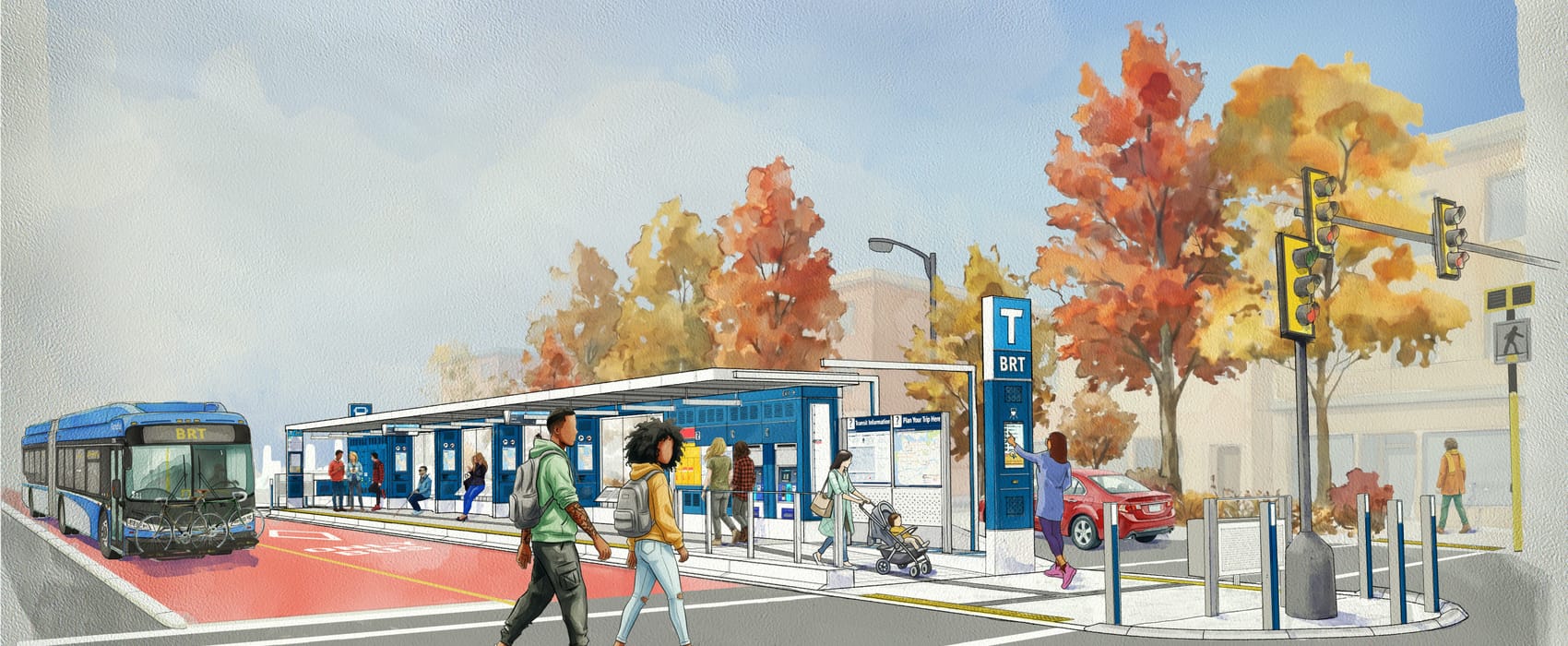
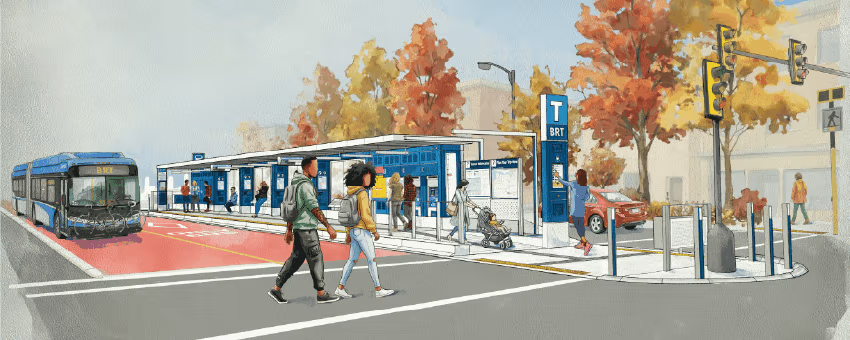
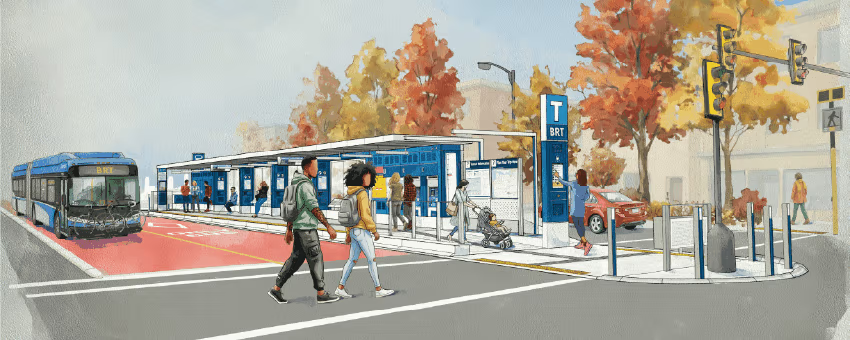
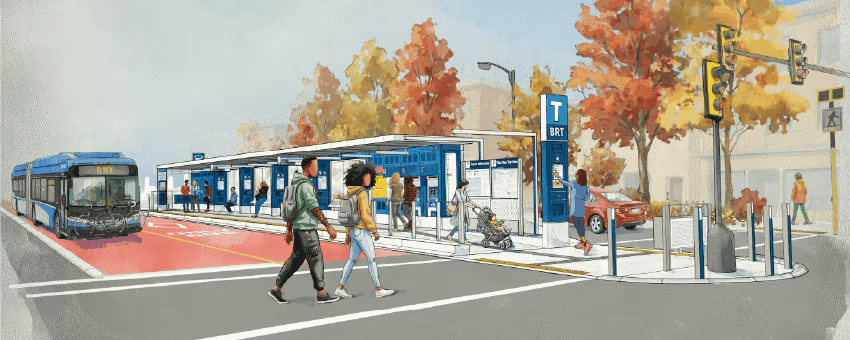
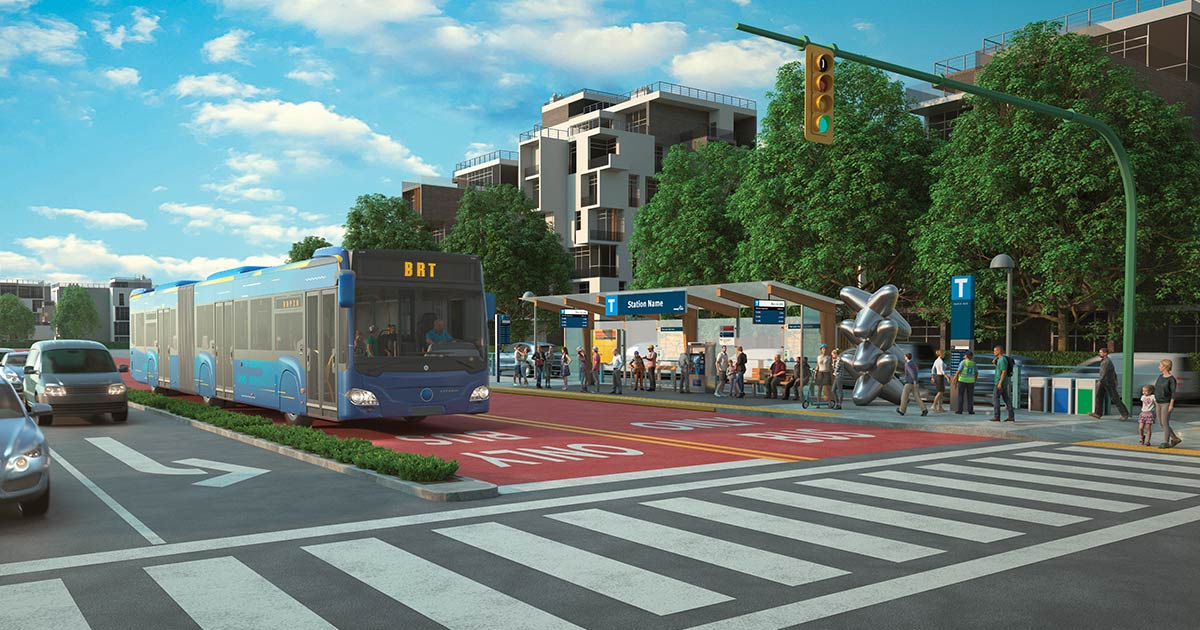
The project would bring dedicated bus lanes, faster service, and weather-protected stations to 200th Street.
Public feedback sessions are happening now through the end of January, and the transit agency wants to hear from residents.
A Long-Overdue Investment
Langley Township is the largest municipality in Metro Vancouver without rapid transit service.
That's about to change.
The Langley-Haney Place BRT would run 22 kilometres from Willowbrook Shopping Centre north along 200th Street, across the Golden Ears Bridge, and east to Haney Place in Maple Ridge.
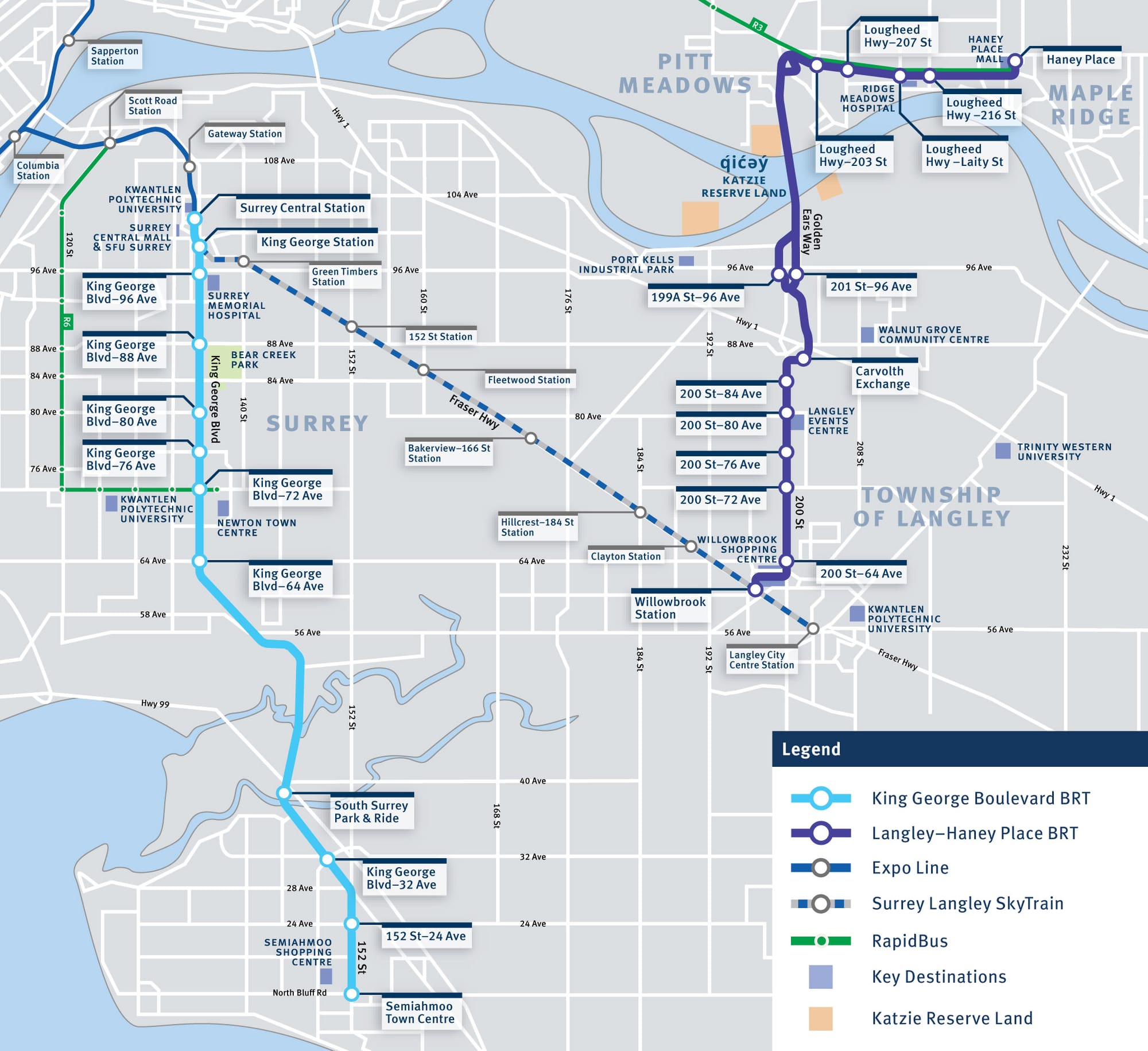
The line would have 13 stations, with buses running every 10 minutes during peak hours in dedicated centre lanes separated from regular traffic.
TransLink estimates travel times would drop by more than 40 percent.
A trip that currently takes over an hour by bus would shrink to about 40 minutes. The agency says the BRT would move at speeds similar to the Canada Line.
"The Langley-Haney Place Bus Rapid Transit line is one of the best corridors to get going on right away, with so much growth, available right-of-way, and strong municipal support from the Township of Langley and Maple Ridge," said Township Mayor Eric Woodward.
The BRT would connect to the future Surrey-Langley SkyTrain extension at Willowbrook Station, which is scheduled to open in 2029. It would also link to the R3 Lougheed Highway RapidBus and Carvolth Exchange.
Why BRT Matters for Langley Residents
For residents of neighbourhoods like Latimer, Walnut Grove, and Willoughby, getting around Langley during rush hour can be a nightmare.
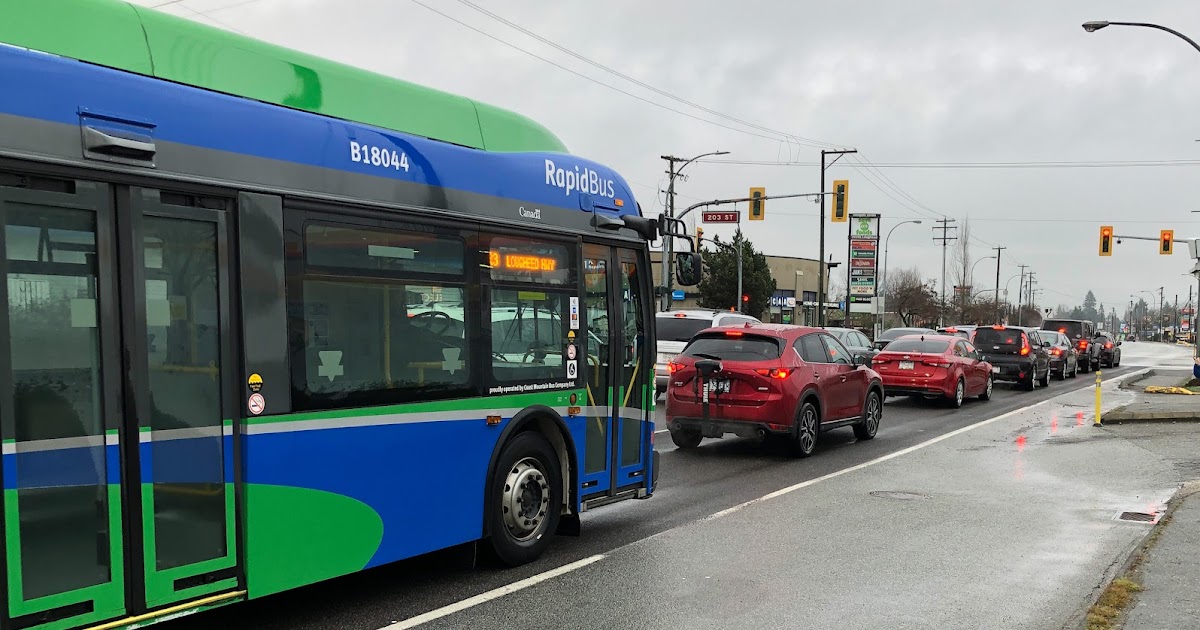
Traffic on 200th Street crawls, and buses stuck in that same traffic offer little advantage over driving.
Centre-running bus lanes would change that equation.
Buses in dedicated lanes bypass congestion entirely, giving transit riders a predictable commute while drivers sit in traffic.
The current Route 501 on 200th Street is the sixth most crowded bus route in Metro Vancouver. About one in five trips operates in overcrowded conditions, according to Denis Agar of Movement YVR, a transit advocacy organization.
"BRT can't come to North Langley soon enough," Agar said. "Centre lane BRT on 200th will finally give Latimer residents a way of getting around that isn't affected by Langley's terrible rush hour traffic."
The benefits extend beyond the BRT corridor itself.
Neighbourhoods like Fort Langley would gain better connections to rapid transit, and feeder routes like the 555 could see increased frequency once the BRT is operational.
The Price Tag: A Fraction of SkyTrain
BRT offers a significant advantage over other rapid transit options: cost.
TransLink estimates BRT costs about $20 million per kilometre to build. Compare that to $375 to $518 million per kilometre for SkyTrain, or $360 million per kilometre for light rail.
That cost difference means BRT can be built faster and serve more communities sooner.
TransLink has identified nine potential BRT corridors across Metro Vancouver, with Langley-Haney Place among the first three priorities alongside King George Boulevard in Surrey and a Metrotown-North Shore route.
Once funding is secured, TransLink estimates construction could be completed within three years.
Local Concerns Worth Watching
Transit advocates support the BRT plan but are watching the details carefully.
Movement YVR notes that some segments of the proposed route would run in mixed traffic rather than dedicated lanes. On those stretches, buses would have no speed advantage over regular service.
The organization also flagged concerns about Carvolth Exchange, where congestion at 86th Avenue and 202nd Street is already a problem.
Movement is calling on the Township of Langley to implement bus lanes and traffic signal priority on that stretch now, rather than waiting for the full BRT project.
"In the long term, we'll be looking for creative thinking from TransLink, the Ministry of Transportation and Transit, as well as the Township of Langley to figure out how to ensure buses don't lose all their travel time savings on this little congested segment of 202," Agar said.
Another gap: the BRT would replace the 501 bus but wouldn't reach Langley City, which the 501 currently serves.
Movement is encouraging Langley City residents to advocate for strong connections to the new line.
Langley City Mayor Nathan Pachal noted that while the BRT won't run on City roads, the Willowbrook area is partially within City limits.
"It will also hopefully improve access to and from the rest of Langley City, depending on how well it integrates with the local bus network," he wrote.
The Funding Question
Here's the catch: the project isn't fully funded yet.
TransLink has preliminary funding to advance planning through the 2025 Investment Plan, but construction money will need to come from provincial and federal governments.
The transit agency is working to secure commitments through future investment plans.
Movement YVR is calling on the federal government to clarify whether funding is available for Metro Vancouver's major transit projects, including the three BRT lines, SkyTrain to UBC, and a gondola to SFU.
The advocacy group also issued a warning about implementation. Toronto recently opened its Line 6 LRT at a cost of $3.5 billion, only to discover it was slower than the bus it replaced. The lesson: details matter.
"TransLink is claiming these BRT lines will run at a similar speed to the Canada Line, and we will be holding them to that," Movement wrote in a statement.
Have Your Say
TransLink is collecting public feedback on the BRT corridor design through February 8. Residents can take an online survey at translinklistens.ca/bus-rapid-transit-program.
Three open houses are scheduled in Langley:
Walnut Grove Community Centre - Sunday, January 25, 2 p.m. to 6 p.m.

Langley Events Centre - Tuesday, January 27, 4:30 p.m. to 8:30 p.m.

Langley Meadows Elementary - Saturday, January 31, noon to 4 p.m.

In previous engagement sessions, 89 percent of respondents said they believe BRT would improve transportation in their community.
For a region that has waited decades for rapid transit investment, this is the moment to shape what that investment looks like. Show up, fill out the survey, and make your voice heard.
References and Further Reading


 Movement
 Nathan Pachal